 Bug FAQ
Scorched Carpet
Ligdia adustata · Order: Lepidoptera · Family: Geometridae
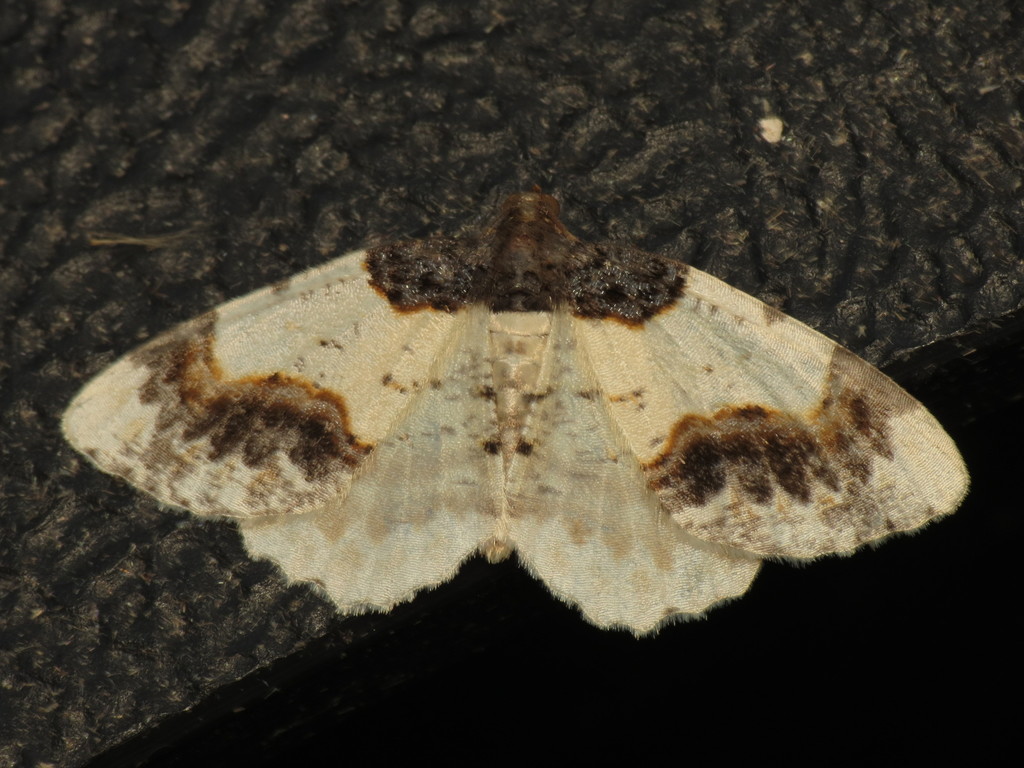
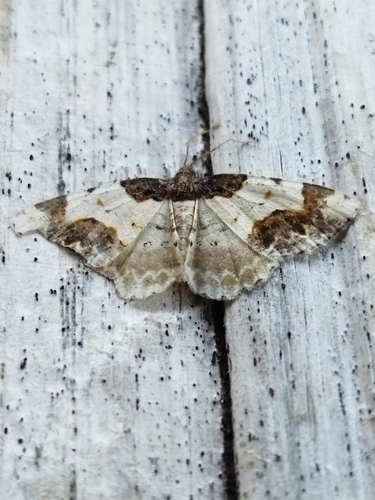
The Scorched Carpet moth has a wingspan of about 25 to 30 mm and its forewings are white to light brown with a dark basal area and a wavy blue-grey and brown band near the edge. It flies twice a year, in spring and again in midsummer, and overwinters as a pupa.
Source: Wikipedia
How to recognize it
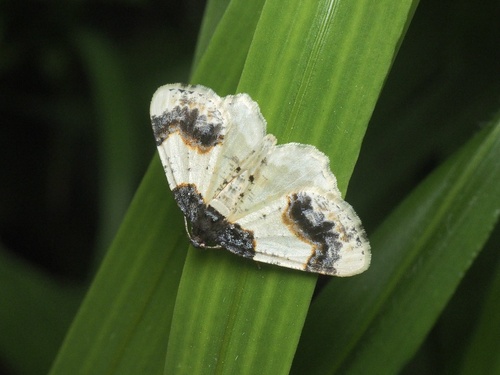
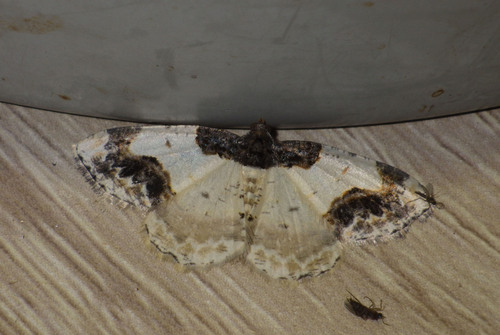
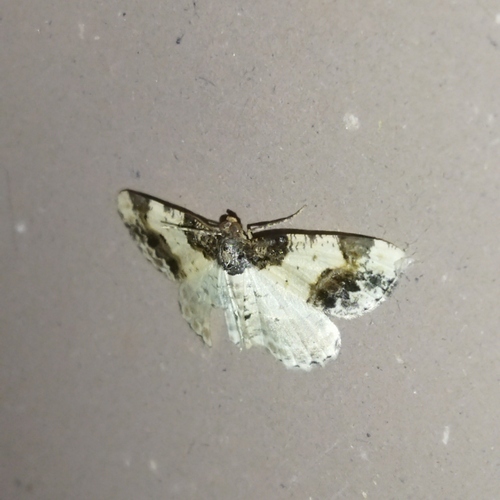
The forewings are glossy white, creamy white or light brownish, with a dark brown (sometimes blue-grey) basal area and a wavy blue-grey and brown band near the outer margin. Hindwings are whitish with pale brown wavy lines along the slightly wavy outer edges, and the underside of the wings is tinged reddish-brown.
Source: Wikipedia
Size
The adult’s wingspan ranges from 25 to 30 mm.
Source: Wikipedia
What it eats
The caterpillars feed on spindle (Euonymus spp.) and on Berberis species.
Source: Wikipedia
Life cycle
There are two generations each year; the moth overwinters in the pupal stage.
Source: Wikipedia
When you see it
Adults are on the wing in April to May and again in July to August, flying from dusk onward.
Source: Wikipedia
Where it comes from
The species occurs throughout most of Europe and the Near East.
Source: Wikipedia
More photos
Questions people ask
When can I see adult Scorched Carpet moths?
They fly in spring (April to May) and again in midsummer (July to August), usually after dusk.
Source: Wikipedia
What do the caterpillars eat?
The larvae feed on spindle plants and on Berberis species.
Source: Wikipedia
How many generations does this moth have each year?
It produces two generations per year and spends the winter as a pupa.
Source: Wikipedia
Same family (Geometridae)





Sources
- Wikipedia: https://en.wikipedia.org/wiki/Ligdia_adustata
Look it up elsewhere: GBIF · iNaturalist · BugGuide · Wikipedia
Text written 2026-10-24 from the sources above and checked sentence by sentence against them. Data fetched 2026-10-22.