 Bug FAQ
Sun Fly
Helophilus pendulus · Order: Diptera · Family: Syrphidae
Also called: Dangling Swamp-lover, The Footballer, Tiger Hoverfly
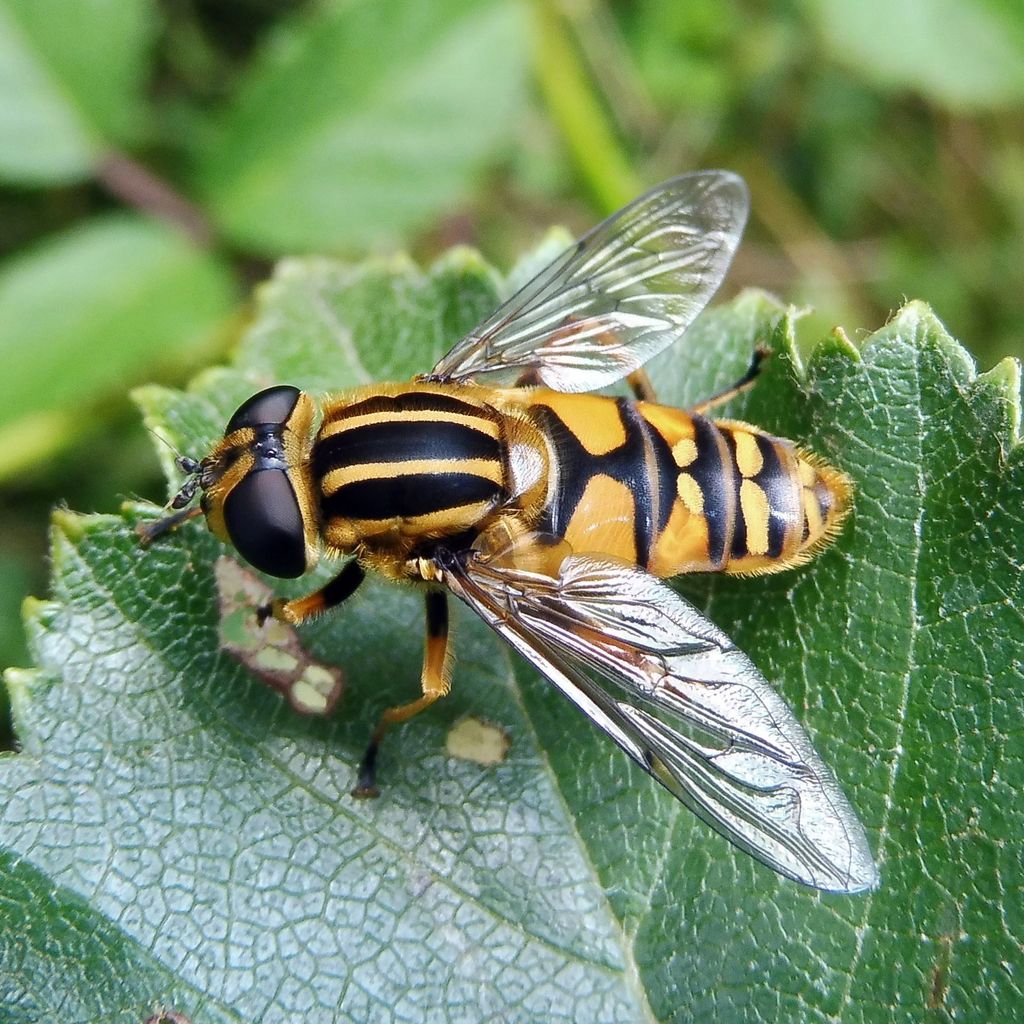
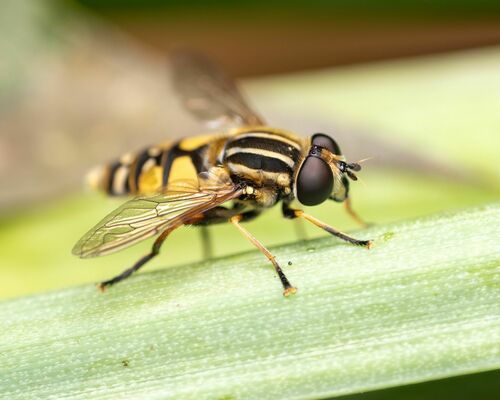
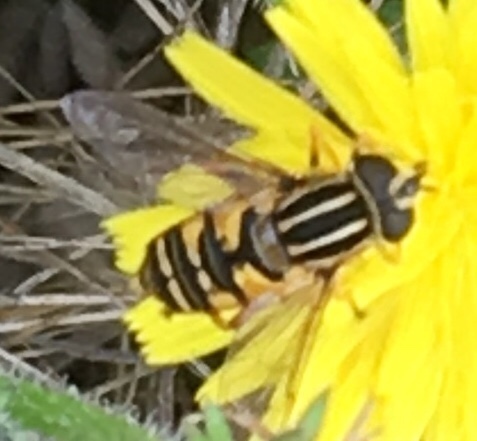
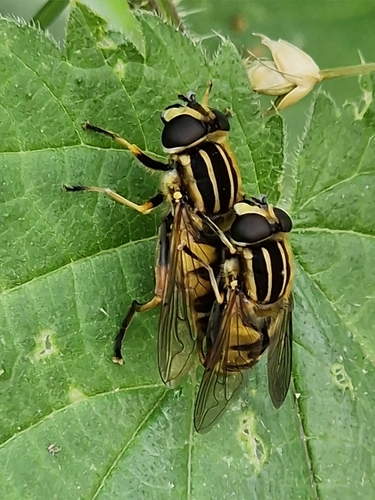
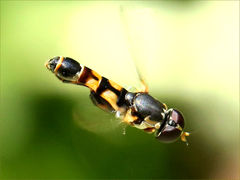
Sun Fly hoverflies have black-and-yellow stripes on the thorax and a patterned abdomen of yellow, black and grey, earning them the nickname “footballer”. They live near many water bodies, from large lakes and rivers to tiny ponds, ditches and muddy puddles, and are widespread across Europe from the Mediterranean to Scandinavia and east through Russia to the Pacific. Adults feed on flower nectar and rest on leaves, while the larvae consume detritus.
Source: Wikipedia
What it eats
Adults visit flowers and often rest on leaves; the larvae feed on detritus.
Source: Wikipedia
Lookalikes
The only other Helophilus species with a yellow border is Helophilus hybridus, but its males differ by having a black band at the base of tergite 2 that does not extend to the sides.
Source: Wikipedia
More photos
Questions people ask
What does the Sun Fly look like?
It has black-and-yellow stripes on the thorax and a abdomen patterned with yellow, black and grey, and its wings are about 8.5 to 11.3 mm long.
Source: Wikipedia
Where does the Sun Fly live?
It lives near many kinds of water, from large lakes and rivers to small ponds, ditches and muddy puddles, and its range covers most of Europe from the Mediterranean to Scandinavia and east to the Pacific.
Source: Wikipedia
What does the Sun Fly eat?
Adults visit flowers for nectar and often rest on leaves, while the larvae feed on decaying organic material.
Source: Wikipedia
How can I tell it apart from similar hoverflies?
The only similar species with a yellow border is Helophilus hybridus; its males have a black band at the base of tergite 2 that does not reach the sides, unlike Sun Fly males.
Source: Wikipedia
Same family (Syrphidae)


Sources
- Wikipedia: https://en.wikipedia.org/wiki/Helophilus_pendulus
Look it up elsewhere: GBIF · iNaturalist · BugGuide · Wikipedia
Text written 2026-10-24 from the sources above and checked sentence by sentence against them. Data fetched 2026-10-22.