 Bug FAQ
Traveling Cherry Millipede
Pleuroloma flavipes · Order: Polydesmida · Family: Xystodesmidae
Also called: Yellow-legged Pleuroloma
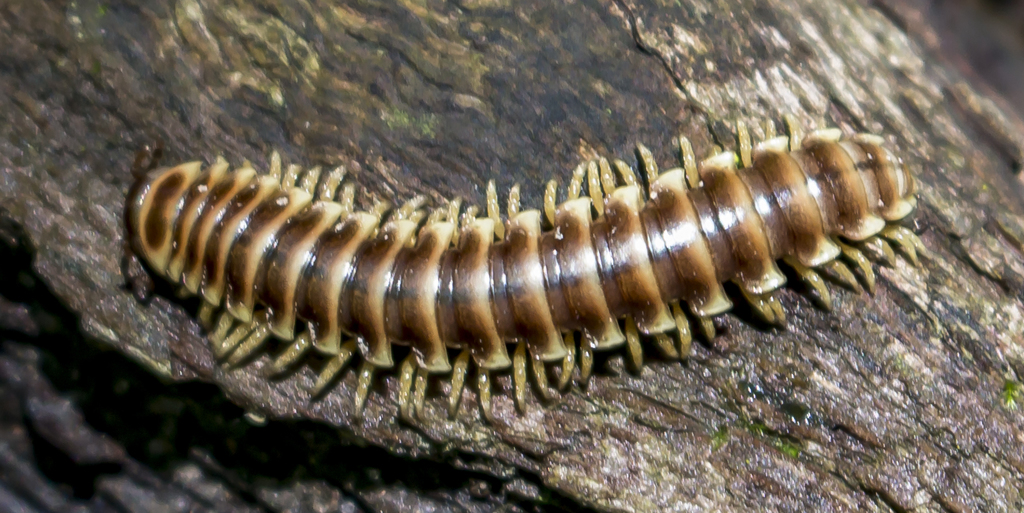
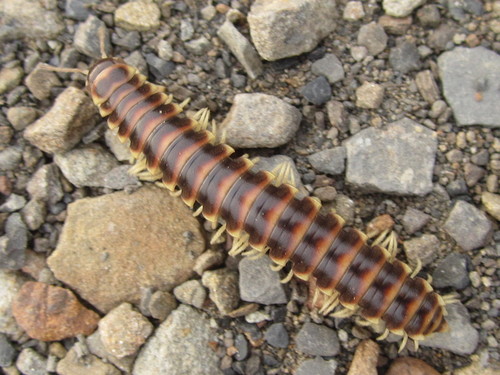
The traveling cherry millipede can be found in large groups that move together in one direction. Its color varies a lot and it looks similar to several Apheloria and Brachoria species. It lives across a wide swath of the eastern United States, from the Dakotas east to Connecticut and south to North Carolina, Louisiana and Texas.
Source: Wikipedia
How to recognize it
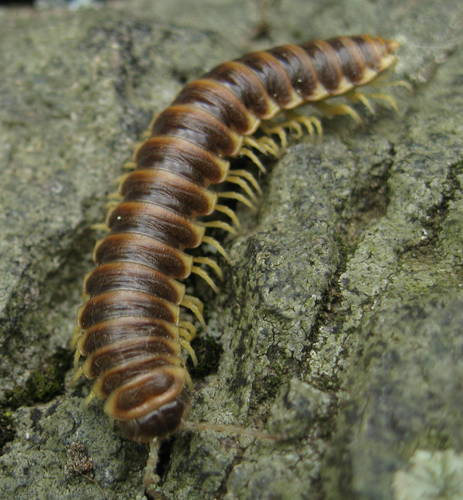
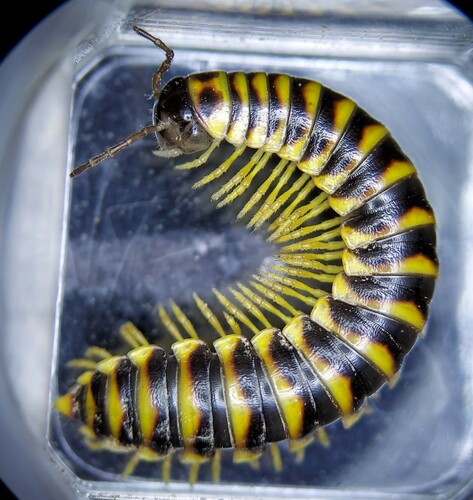
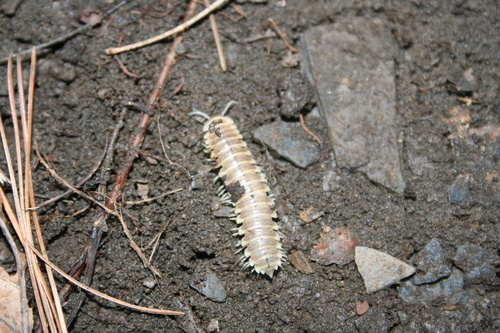
The species shows extreme color variation and mimics several Apheloria and Brachoria millipedes.
Source: Wikipedia
Where it lives
It has the broadest distribution of any xystodesmid millipede in eastern North America.
Source: Wikipedia
Lookalikes
Because of mimicry, it can be confused with several species of Apheloria and Brachoria.
Source: Wikipedia
Where it is found in the US
Recorded in 29 of 51 states and DC. Most records: Wisconsin, Michigan, Illinois, Minnesota, Ohio, Virginia, Indiana, Iowa.
Darker = more records. Counts are museum and citizen-science records, not population size.
Source: GBIF
Status: native in North America; native in Canada; native in United States. Source: iNaturalist
Months it is reported in the US
Source: GBIF
More photos
Questions people ask
What other bugs does the traveling cherry millipede resemble?
It mimics several Apheloria and Brachoria species, making identification tricky.
Source: Wikipedia
Where is the traveling cherry millipede found?
It occurs across eastern North America, from the Dakotas to Connecticut and down to Texas and Louisiana.
Source: Wikipedia
Same family (Xystodesmidae)


Sources
- Wikipedia: https://en.wikipedia.org/wiki/Pleuroloma_flavipes
Look it up elsewhere: GBIF · iNaturalist · BugGuide · ITIS · Wikipedia
Text written 2026-10-24 from the sources above and checked sentence by sentence against them. Data fetched 2026-10-24.