 Bug FAQ
Yellow-and-black Flat Millipede
Apheloria tigana · Order: Polydesmida · Family: Xystodesmidae
Source: Wikipedia
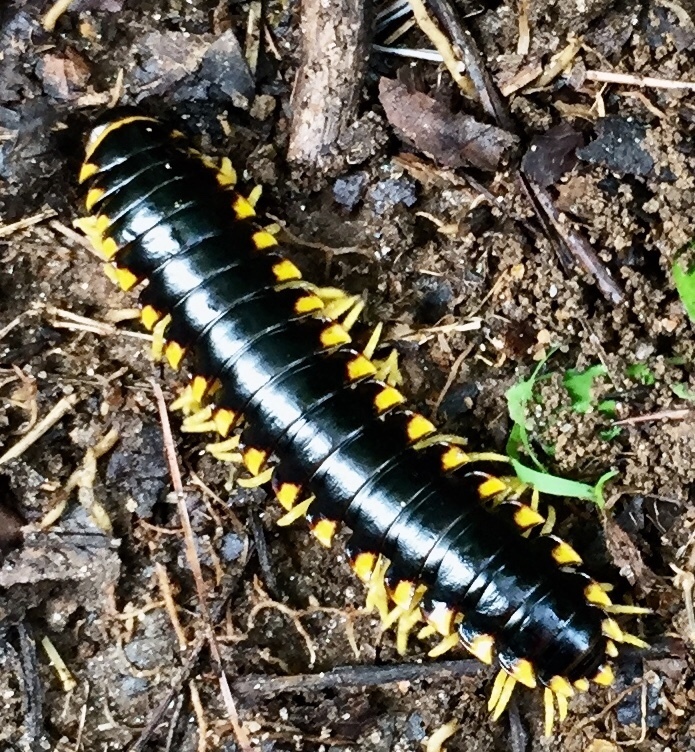
It lives from coastal southeastern North Carolina up into the Blue Ridge Mountains of Virginia. When handled it sprays cyanide compounds that can irritate skin and eyes, so wash your hands afterward.
Source: Wikipedia
How to recognize it
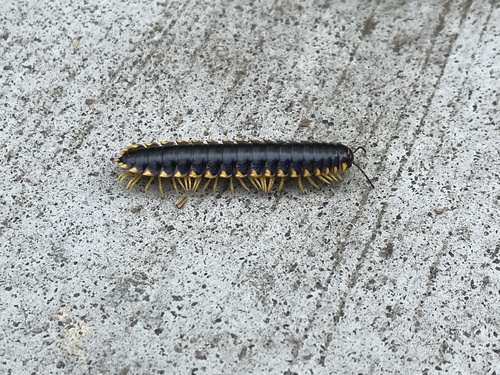
It has yellow lateral extensions on each segment and yellow spots along the middle of the back on the first segment and the last few segments.
Source: Wikipedia
Size
It is a large millipede in the family Xystodesmidae.
Source: Wikipedia
Does it bite or sting?
It secretes cyanide compounds as a defense; wash your hands after handling to avoid irritation.
Source: Wikipedia
Where it comes from
It is a North American species native to the United States.
Source: Wikipedia
Lookalikes
South of the Cape Fear River basin a similar, undescribed Apheloria species has yellow dorsal marks on most segments.
Source: Wikipedia
Where it is found in the US
Recorded in 9 of 51 states and DC. Most records: North Carolina, South Carolina, Illinois, Missouri, Indiana, Kentucky, Arkansas, Tennessee.
Darker = more records. Counts are museum and citizen-science records, not population size.
Source: GBIF
Months it is reported in the US
Source: GBIF
More photos
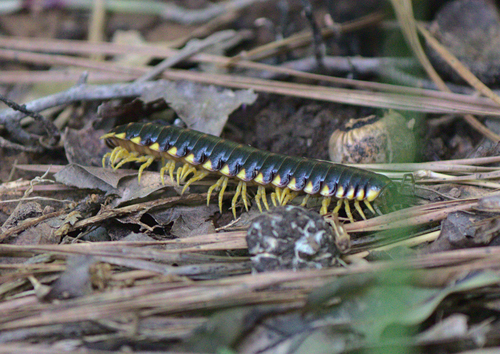
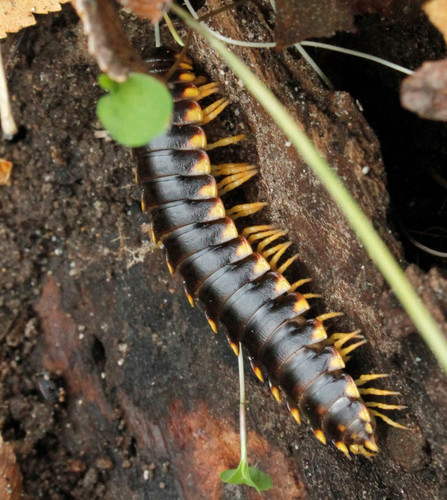
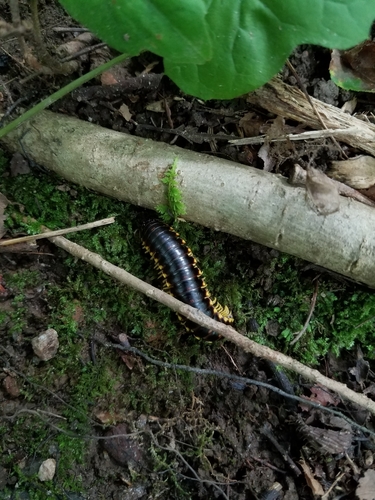
Questions people ask
How should I handle a yellow-and-black flat millipede?
Wash your hands after touching it because its defensive secretions can irritate skin or eyes.
Source: Wikipedia
What does it look like?
It has yellow side plates (paranota) and yellow spots along the middle of its back on several segments.
Source: Wikipedia
Where might I find this millipede?
From coastal southeastern North Carolina up into the Blue Ridge Mountains of Virginia.
Source: Wikipedia
Same family (Xystodesmidae)



Sources
- Wikipedia: https://en.wikipedia.org/wiki/Apheloria_tigana
Look it up elsewhere: GBIF · iNaturalist · BugGuide · ITIS · Wikipedia
Text written 2026-10-24 from the sources above and checked sentence by sentence against them. Data fetched 2026-10-24.