 Bug FAQ
Triceratops Beetle
Phileurus truncatus · Order: Coleoptera · Family: Scarabaeidae
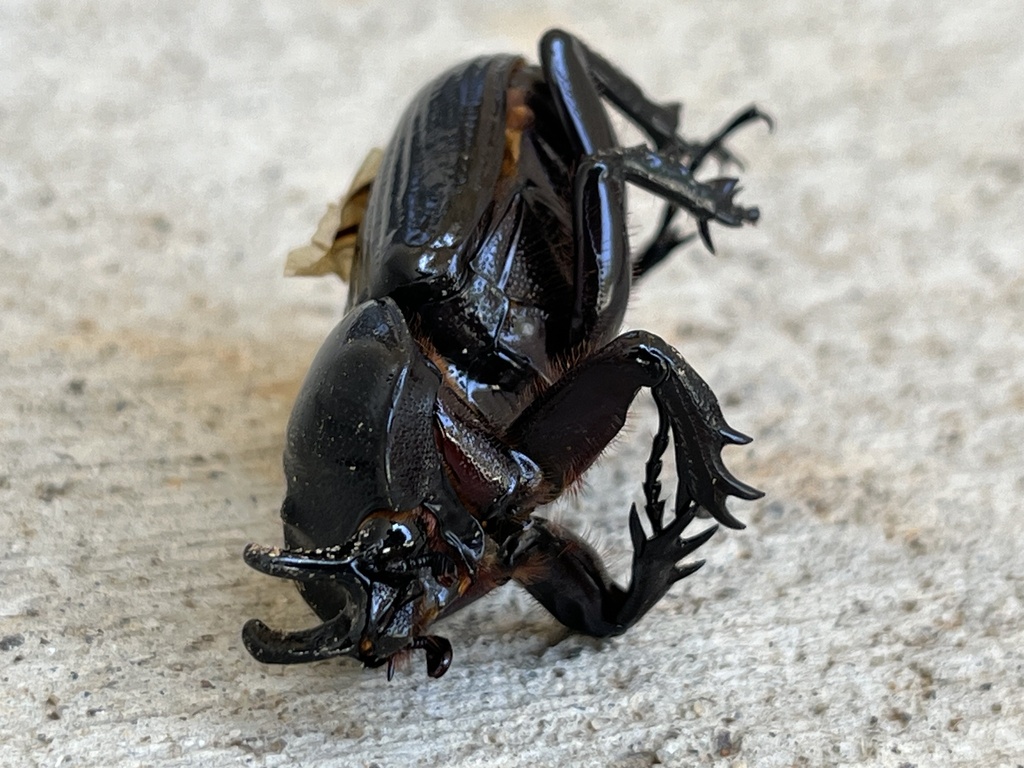
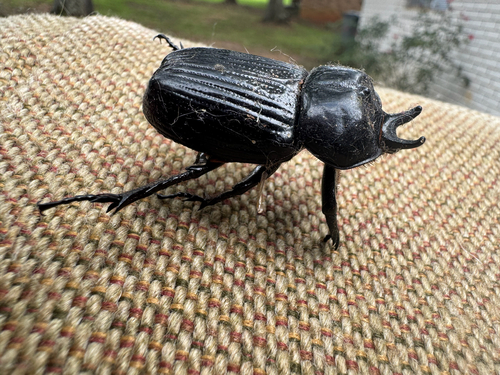
Adult Triceratops beetles are 32-38 mm long and have large horns on the head as well as a central divot on the prothorax with a tiny bump before it. The larvae live inside rotting oak trunks, feeding on decaying wood, while adults eat other beetle larvae, assorted bugs, and occasionally fruit.
Source: Wikipedia
How to recognize it
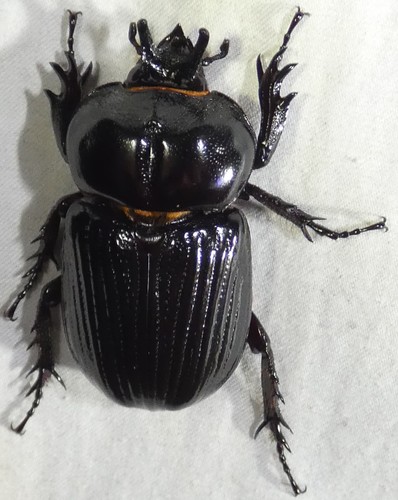
Both males and females have prominent head horns and a distinct groove down the middle of the prothorax with a small bump just before the groove.
Source: Wikipedia
Size
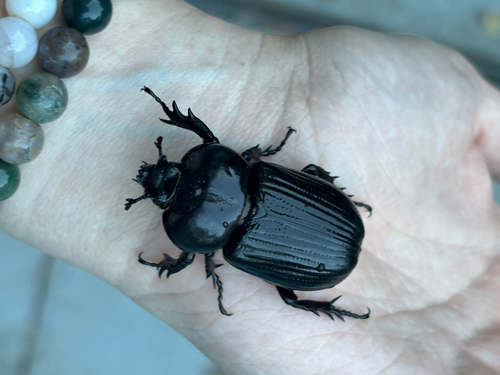
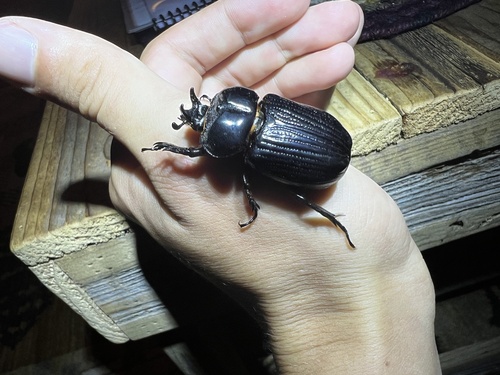
Adults measure between 32 and 38 mm in length.
Source: Wikipedia
Does it bite or sting?
When disturbed, they produce a stridulating sound as a defensive reaction.
Source: Wikipedia
Where it lives
Larvae develop inside rotting trunks of trees, especially oak, where they consume the decaying wood beneath the bark.
Source: Wikipedia
What it eats
Larvae feed on rotting wood inside tree trunks. Adult beetles prey on other beetle larvae and various insects, and will sometimes eat fruit.
Source: Wikipedia
Life cycle
The immature stage lives inside rotting wood, feeding on the decayed material. After pupation, adults emerge and become predators of other insect larvae and occasional fruit eaters.
Source: Wikipedia
Where it comes from
The species occurs across much of the southern United States, extending north to the central southern region.
Source: Wikipedia
Lookalikes
They resemble Hemiphileurus illatus but are 7-13 mm longer and lack the speckled divots seen on that species.
Source: Wikipedia
Where it is found in the US
Recorded in 14 of 51 states and DC. Most records: North Carolina, Georgia, Alabama, Florida, Texas, South Carolina, Tennessee, Virginia.
Darker = more records. Counts are museum and citizen-science records, not population size.
Source: GBIF
Status: native in North America; native in United States. Source: iNaturalist
Months it is reported in the US
Source: GBIF
More photos
Questions people ask
What distinctive markings help identify them?
They have large head horns and a central groove on the prothorax with a tiny bump before it.
Source: Wikipedia
Where are they found in the United States?
They occur throughout the southern U.S. and reach up into the central southern region.
Source: Wikipedia
Do they make noise when threatened?
Yes, they produce a stridulating sound when disturbed.
Source: Wikipedia
Same family (Scarabaeidae)
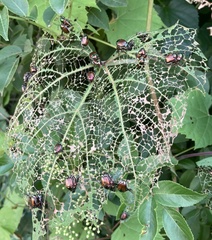 Japanese BeetlePopillia japonicaDamages trees, gardens or crops
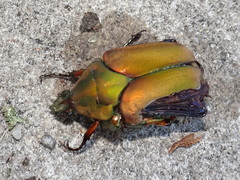 Common Green June BeetleCotinis nitidaDamages trees, gardens or crops
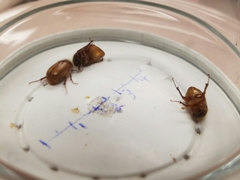 Phyllophaga crinitaPhyllophaga crinitaDamages trees, gardens or crops
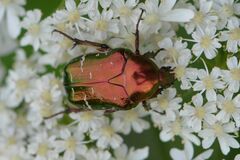 European Rose ChaferCetonia aurata
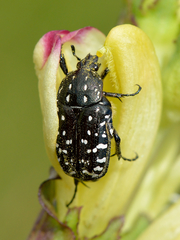 Mediterranean Spotted ChaferOxythyrea funestaDamages trees, gardens or crops
 Oriental BeetleExomala orientalisDamages trees, gardens or crops
Sources
- Wikipedia: https://en.wikipedia.org/wiki/Phileurus_truncatus
Look it up elsewhere: GBIF · iNaturalist · BugGuide · ITIS · Wikipedia
Text written 2026-10-23 from the sources above and checked sentence by sentence against them. Data fetched 2026-10-23.