 Bug FAQ
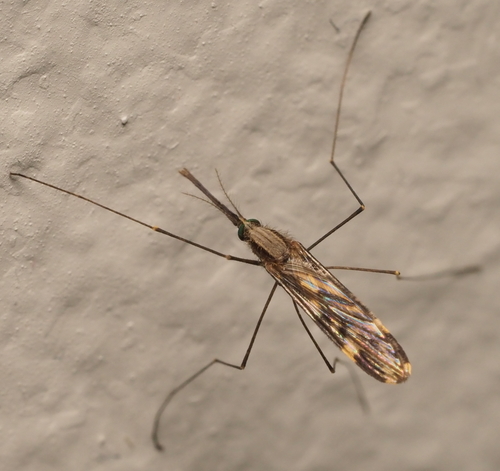
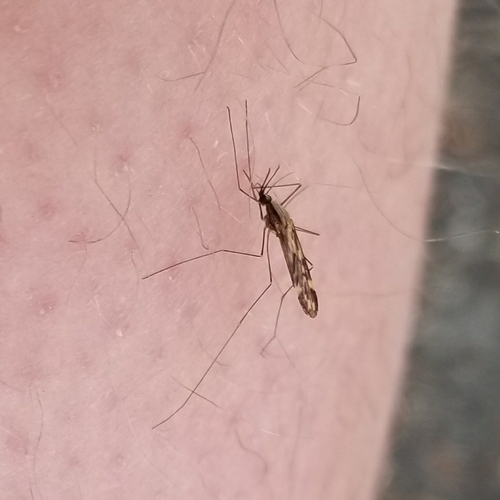
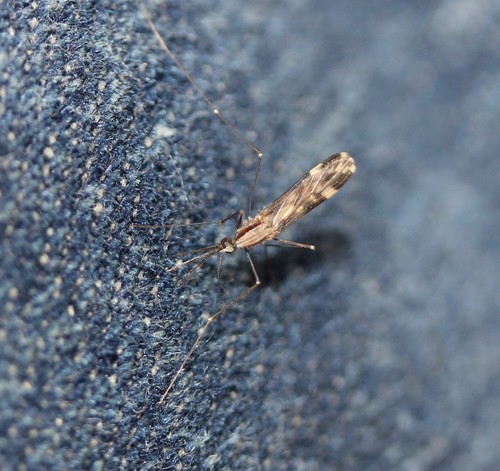
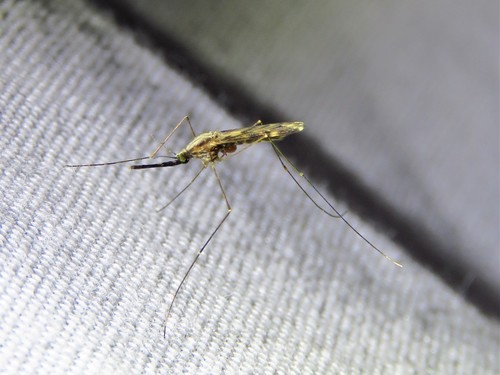
Woodland Malaria Mosquito
Anopheles punctipennis · Order: Diptera · Family: Culicidae
Source: Wikipedia

The woodland malaria mosquito lives across North America and its larvae develop in cool, clear water such as streams. Adult females bite humans day or night and can spread Plasmodium vivax and P. falciparum, the parasites that cause malaria.
Source: Wikipedia
Does it bite or sting?
Females may bite both during the day and at night.
Source: Wikipedia
Where it lives
Adults stay outdoors and are rarely seen inside homes.
Source: Wikipedia
What it eats
Female mosquitoes feed on blood, including human blood.
Source: Wikipedia
Where it comes from
It is native to and found throughout North America.
Source: Wikipedia
Where it is found in the US
Recorded in 45 of 51 states and DC. Most records: Iowa, Illinois, Indiana, Maryland, Virginia, Ohio, Massachusetts, Texas.
Darker = more records. Counts are museum and citizen-science records, not population size.
Source: GBIF
Status: native in North America; native in Canada. Source: iNaturalist
Months it is reported in the US
Source: GBIF
More photos
Questions people ask
Can they transmit malaria?
Yes, they can carry and transmit Plasmodium vivax and P. falciparum, which cause human malaria.
Source: Wikipedia
Where do they breed?
Their larvae develop in cool, clear water bodies such as streams.
Source: Wikipedia
Same family (Culicidae)
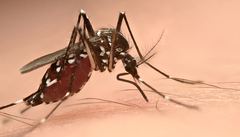 Asian Tiger MosquitoAedes albopictusCan spread germs or disease
 House Mosquito ComplexCulex pipiensCan spread germs or disease
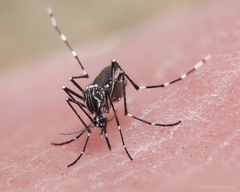 Yellow Fever MosquitoAedes aegyptiCan spread germs or disease
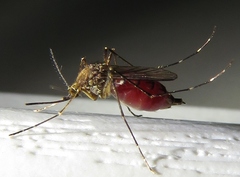 Inland Floodwater MosquitoAedes vexansCan spread germs or disease
 Asian Bush MosquitoAedes japonicusCan bite
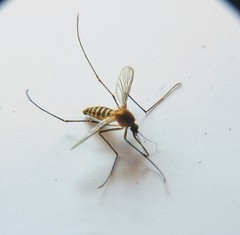 Southern House MosquitoCulex quinquefasciatusCan spread germs or disease
Sources
- Wikipedia: https://en.wikipedia.org/wiki/Anopheles_punctipennis
Look it up elsewhere: GBIF · iNaturalist · BugGuide · ITIS · Wikipedia
Text written 2026-10-23 from the sources above and checked sentence by sentence against them. Data fetched 2026-10-23.