 Bug FAQ
Argentine Ant
Linepithema humile · Order: Hymenoptera · Family: Formicidae
Source: Wikipedia
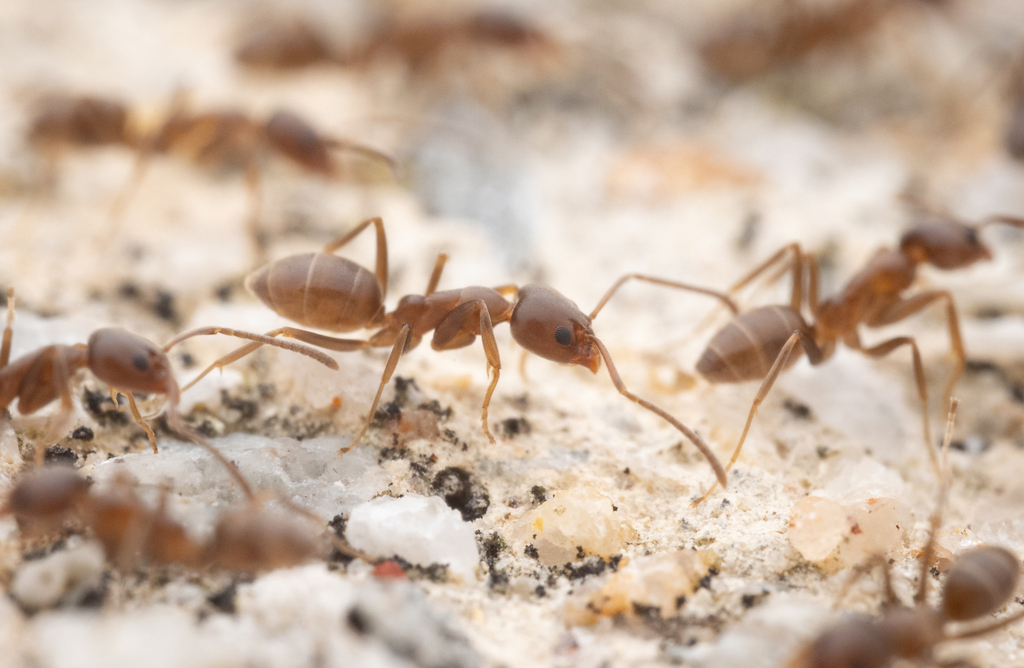
Argentine ants are small brown ants about 2.2 to 2.6 mm long. They often enter houses in search of food or water, and it is common to see a few queens foraging together with workers in kitchens.
Source: Wikipedia
How to recognize it
They are dull light to dark brown in color.
Source: Wikipedia
Size
Workers measure about 2.2 to 2.6 mm.
Source: Wikipedia
Is it a pest in the house?
They commonly enter structures for food or water, especially during dry, hot weather or after floods. In kitchens it is not unusual to see two or three queens foraging with workers.
Source: Wikipedia
How to get rid of it
Bait made of 25 % water with 0.5 to 1 % boric acid or borate salts is toxic to them. Slow-acting poison baits such as fipronil, hydramethylnon, or sulfluramid are carried back to the nest and can kill the whole colony, including queens.
Source: Wikipedia
Where it lives
They nest in many places, from soil and leaf litter to cracks in concrete, between boards, or inside human belongings.
Source: Wikipedia
Life cycle
In mid-winter most of the colony are workers with few queens and little reproductive activity. Eggs are laid in late winter, hatch into sexuals by May, and worker numbers rise from mid-March to October before dropping over winter.
Source: Wikipedia
When you see it
Worker production increases from mid-March to October, then declines through winter.
Source: Wikipedia
Where it comes from
Their native range is limited to riparian lowlands of the Paraná River basin in northern Argentina, Uruguay, Paraguay, and southern Brazil.
Source: Wikipedia
Where it is found in the US
Recorded in 21 of 51 states and DC. Most records: California, Mississippi, Alabama, Texas, Hawaii, North Carolina, Georgia, Florida.
Darker = more records. Counts are museum and citizen-science records, not population size.
Source: GBIF
Status: introduced in United States; introduced in Canada. Source: iNaturalist
Months it is reported in the US
Source: GBIF
More photos


Questions people ask
How can I get rid of Argentine ants?
Use slow-acting poison baits (e.g., fipronil, hydramethylnon, sulfluramid) that workers bring back to the nest, or a borate-sucrose bait with 0.5 to 1 % boric acid.
Source: Wikipedia
Same family (Formicidae)
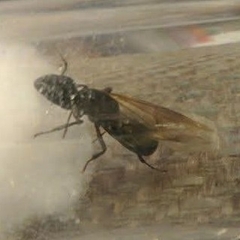 Eastern Black Carpenter AntCamponotus pennsylvanicusCan damage your home
 Red Imported Fire AntSolenopsis invictaCan sting
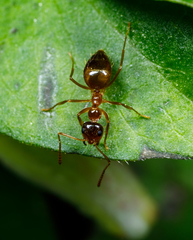 American Winter AntPrenolepis imparis
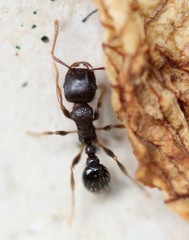 Immigrant Pavement AntTetramorium immigransCan sting
 Odorous House AntTapinoma sessileCan damage your home
 Red Harvester AntPogonomyrmex barbatusVenomous
Sources
- Wikipedia: https://en.wikipedia.org/wiki/Argentine_ant
Look it up elsewhere: GBIF · iNaturalist · BugGuide · ITIS · Wikipedia
Text written 2026-10-23 from the sources above and checked sentence by sentence against them. Data fetched 2026-10-22.