 Bug FAQ
Black-tailed Bumble Bee
Bombus melanopygus · Order: Hymenoptera · Family: Apidae
Also called: Black Tail Bumble Bee, Orange-rumped Bumble Bee

The black-tailed bumble bee lives across western North America, from Alaska down to Baja California, in many habitats including farms and cities. It nests either underground or in above-ground structures and feeds on a wide range of plants such as manzanitas, lupines, and clovers.
Source: Wikipedia
Where it lives
It can live in many habitat types, including agricultural and urban areas. Nests are found underground or in above-ground structures.
Source: Wikipedia
What it eats
It feeds on many plants, including manzanitas, Ceanothus, lupines, penstemons, willows, sages, and clovers.
Source: Wikipedia
Where it comes from
It is native to western North America, ranging from the Pacific to the Rocky Mountains. Its distribution extends from Alaska to Baja California.
Source: Wikipedia
Lookalikes
Individuals with black abdominal segments were once called Bombus edwardsii, a separate species. Genetic studies show both forms are the same species, making B. edwardsii a synonym.
Source: Wikipedia
Where it is found in the US
Recorded in 19 of 51 states and DC. Most records: California, Washington, Alaska, Oregon, Colorado, Idaho, Montana, Utah.
Darker = more records. Counts are museum and citizen-science records, not population size.
Source: GBIF
Status: native in North America; native in United States; native in Canada. Source: iNaturalist
Months it is reported in the US
Source: GBIF
More photos
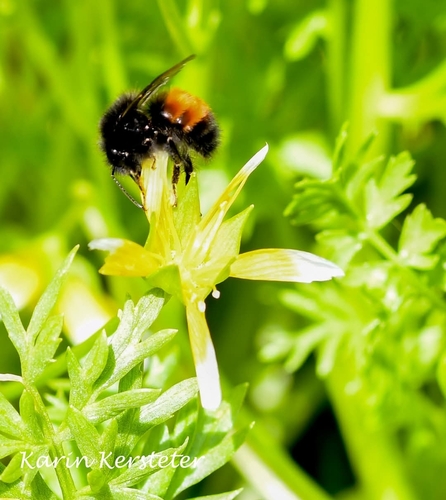
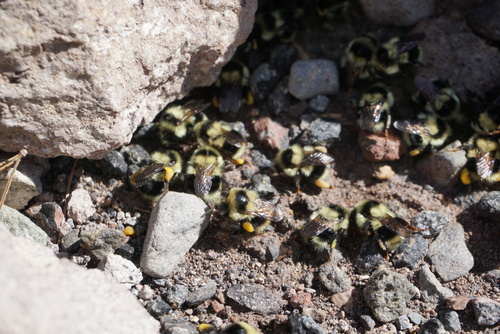
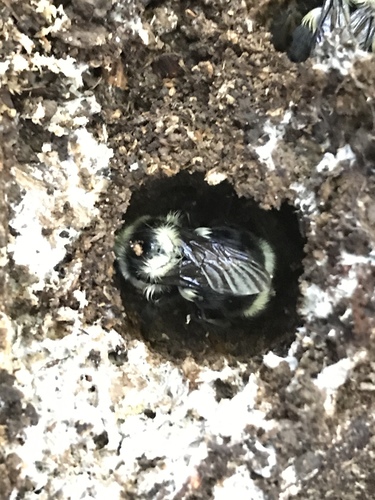
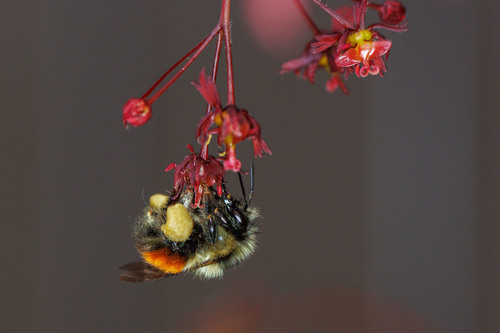
Questions people ask
Where can I find this bee?
It lives across western North America in many habitats, from farms to cities, and nests underground or in structures.
Source: Wikipedia
Same family (Apidae)


Sources
- Wikipedia: https://en.wikipedia.org/wiki/Bombus_melanopygus
Look it up elsewhere: GBIF · iNaturalist · BugGuide · ITIS · Wikipedia
Text written 2026-10-22 from the sources above and checked sentence by sentence against them. Data fetched 2026-10-22.