 Bug FAQ
Centris pallida
Centris pallida · Order: Hymenoptera · Family: Apidae
Source: Wikipedia
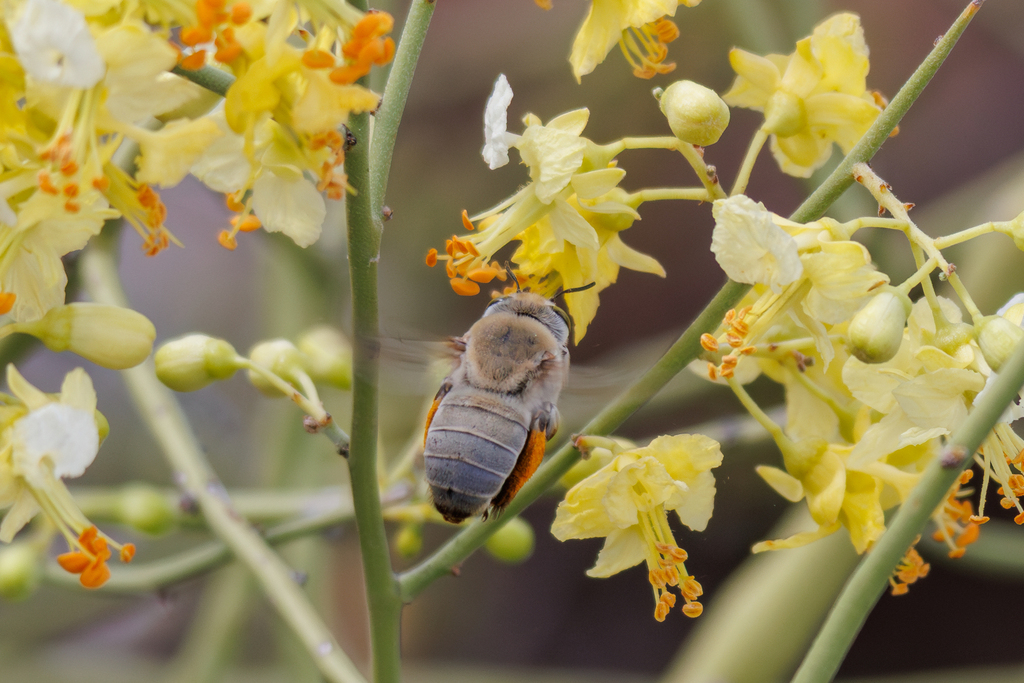
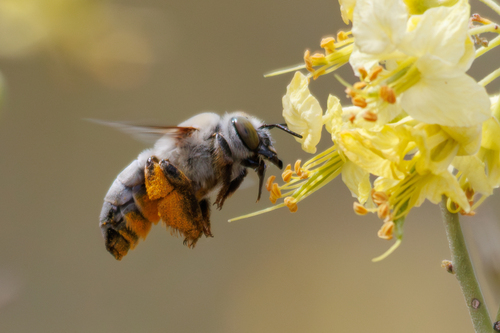
Centris pallida is a solitary desert bee about 16 to 17 mm long, black with dense grey fur and yellow-tinged thorax hair. It lives in hot, dry areas of the southwestern United States and western Mexico, where it nests in the ground and can leave noticeable mounds. Males need to drink large amounts of nectar each day, and the bee’s sting is only mildly painful.
Source: Wikipedia
How to recognize it
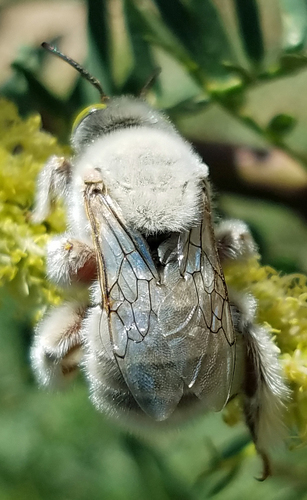
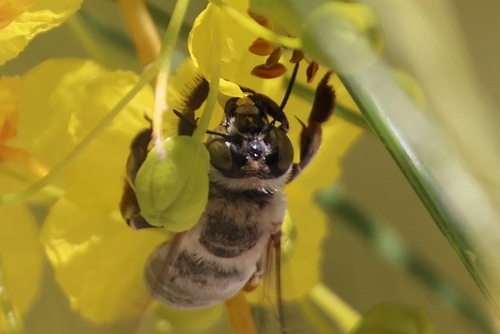
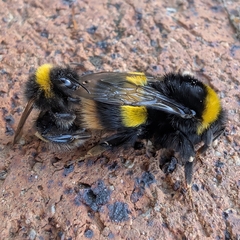
The bee is black with a thick covering of grey fur on its back, a slightly yellow thorax, mixed black and reddish leg hair, and brownish-yellow hair underneath; its wings are clear with black veins.
Source: Wikipedia
Size
Adults are about 16 to 17 mm long, with males and females the same size.
Source: Wikipedia
Is it a pest in the house?
Their burrowing can create unsightly mounds, especially where many females nest.
Source: Wikipedia
Does it bite or sting?
Their sting is mild and not dangerous.
Source: Wikipedia
Where it lives
It inhabits dry, hot environments in North America.
Source: Wikipedia
What it eats
It feeds on flowers that can tolerate high temperatures.
Source: Wikipedia
Life cycle
Being solitary, the species uses a dual-strategy mating system that remains stable against invading strategies.
Source: Wikipedia
When you see it
During the day the bees stay inactive, hiding in shade or burrows to avoid overheating.
Source: Wikipedia
Lookalikes
It has been called the digger bee, desert bee, or pallid bee because of its behavior, habitat, and pale color.
Source: Wikipedia
Where it is found in the US
Recorded in 7 of 51 states and DC. Most records: Arizona, California, Nevada, Colorado, New Mexico, Texas, Utah.
Darker = more records. Counts are museum and citizen-science records, not population size.
Source: GBIF
Status: native in North America; native in United States. Source: iNaturalist
Months it is reported in the US
Source: GBIF
More photos
Questions people ask
Why are there mounds in my yard?
Female bees dig burrows in the ground, and the entrances can leave noticeable mounds.
Source: Wikipedia
Same family (Apidae)


Sources
- Wikipedia: https://en.wikipedia.org/wiki/Centris_pallida
Look it up elsewhere: GBIF · iNaturalist · BugGuide · ITIS · Wikipedia
Text written 2026-10-23 from the sources above and checked sentence by sentence against them. Data fetched 2026-10-23.