 Bug FAQ
Common American Thief Ant
Solenopsis molesta · Order: Hymenoptera · Family: Formicidae
Also called: Thief Ant
Source: Wikipedia, faculty.evansville.edu, Penn State Extension

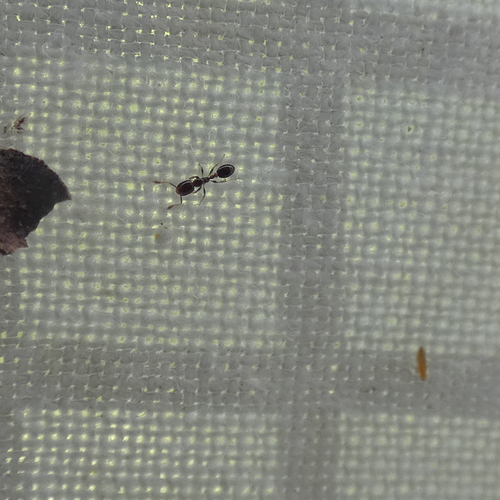
Thief ants are tiny yellowish workers about 1.5 mm long with very small eyes and fine yellow hairs. They nest in cracks, under floorboards, rocks, soil or rotting wood and can enter homes through tiny openings, especially in hot weather. They feed on grease, meat, cheese, dairy, seeds and other pantry foods, often contaminating stored items.
Source: Penn State Extension, Wikipedia, faculty.evansville.edu
How to recognize it
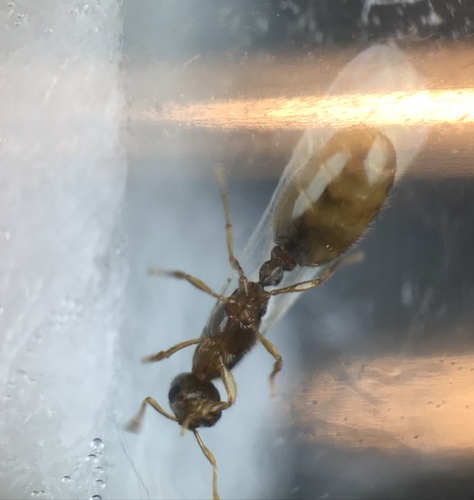
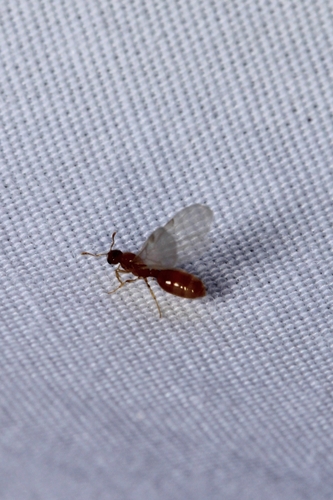
Workers are yellow or pale brown, covered in erect yellow hairs and have very small eyes. Queens are just over 5 mm long.
Source: Wikipedia, Penn State Extension
Size
Workers range from about 0.5 mm to 3 mm in length, typically around 1.5 mm. Queens can be a little over 5 mm long.
Source: Wikipedia, Penn State Extension
Is it a pest in the house?
They can live in homes unnoticed and become a nuisance. They damage stored food, pantry goods, seeds, grease, olive oil and other kitchen items.
Source: Wikipedia, faculty.evansville.edu
Does it bite or sting?
Workers have a very small stinger on their oblong abdomen. Their sting feels like a fine needle puncture.
Source: Wikipedia, Penn State Extension, faculty.evansville.edu
How to get rid of it
Baiting with oil or grease in the center of traps is a common control method. Thief ants are not attracted to many standard ant traps, so baiting is preferred. Control may require two weeks or longer to be effective.
Source: Wikipedia, Penn State Extension
Where it lives
They nest under rocks, in exposed soil, rotting logs, cracks, or under floorboards. They can enter homes through foundation cracks or small wood openings, especially when it’s hot.
Source: Wikipedia, Penn State Extension
What it eats
They are attracted to grease and are sometimes called grease ants. They also eat meat, cheese, other dairy products, and seeds.
Source: Wikipedia
Life cycle
An egg becomes a fully mobile worker in about 52 days. The larval stage lasts roughly 21 days when conditions are suitable.
Source: Wikipedia
When you see it
Nuptial flights and mating occur from late July through early fall.
Source: Wikipedia
Where it comes from
They are native to the United States, found across eastern, western, and central regions and also in northern Mexico.
Source: Wikipedia
Lookalikes
They are often confused with Pharaoh ants because of similar size and color. Differences in markings can be used to tell them apart.
Source: Penn State Extension, Wikipedia
Where it is found in the US
Recorded in 49 of 51 states and DC. Most records: California, Utah, Illinois, Colorado, Texas, Ohio, New York, New Mexico.
Darker = more records. Counts are museum and citizen-science records, not population size.
Source: GBIF
Status: native in North America; native in United States. Source: iNaturalist
Months it is reported in the US
Source: GBIF
More photos
Questions people ask
How can I identify thief ants?
Look for tiny yellow or pale brown workers about 1.5 mm long with very small eyes and fine yellow hairs.
Source: Penn State Extension, Wikipedia
Do thief ants bite or sting?
They have a very small stinger and their sting feels like a fine needle puncture.
Source: Wikipedia, faculty.evansville.edu
What do thief ants eat in my house?
They are attracted to grease, meat, cheese, dairy products, seeds and other pantry foods.
Source: Wikipedia, faculty.evansville.edu
How do I get rid of thief ants?
Use bait stations containing oil or grease, and be patient as control can take two weeks or more.
Source: Wikipedia, Penn State Extension
Same family (Formicidae)
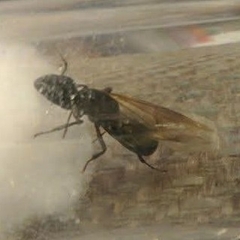 Eastern Black Carpenter AntCamponotus pennsylvanicusCan damage your home
 Red Imported Fire AntSolenopsis invictaCan sting
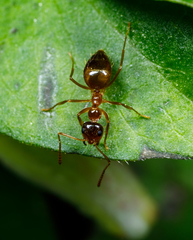 American Winter AntPrenolepis imparis
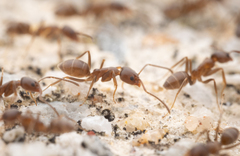 Argentine AntLinepithema humileNuisance, not dangerous
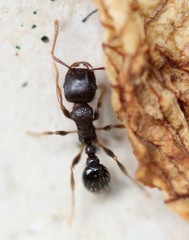 Immigrant Pavement AntTetramorium immigransCan sting
 Odorous House AntTapinoma sessileCan damage your home
Sources
- Wikipedia: https://en.wikipedia.org/wiki/Solenopsis_molesta
- faculty.evansville.edu: https://faculty.evansville.edu/ck6/bstud/sayant.html
- Penn State Extension: https://extension.psu.edu/thief-ant
Look it up elsewhere: GBIF · iNaturalist · BugGuide · ITIS · Wikipedia
Text written 2026-10-23 from the sources above and checked sentence by sentence against them. Data fetched 2026-10-23.