 Bug FAQ
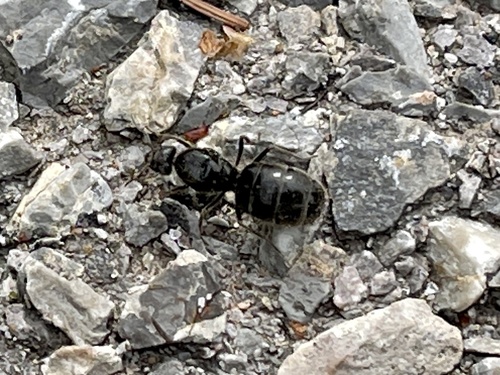
Escamolera Ant
Liometopum apiculatum · Order: Hymenoptera · Family: Formicidae
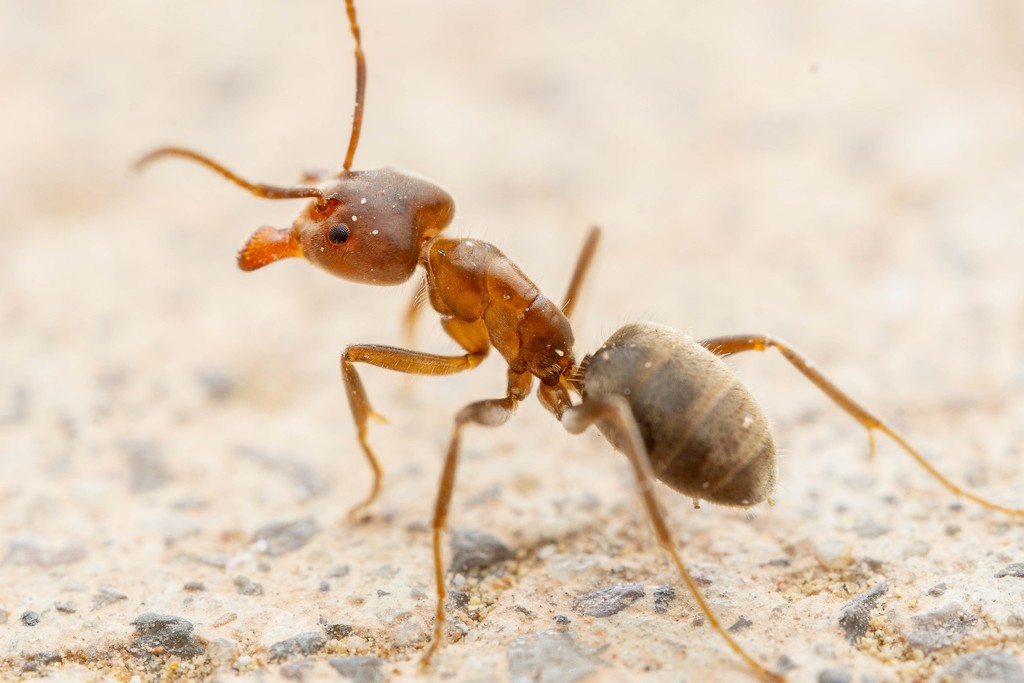
Escamolera ants live in dry areas of the southwestern United States and Mexico, ranging from Colorado and Texas down to Quintana Roo. They are opportunistic carnivores and granivores, feeding on dead insects, crustaceans, annelids, mollusks, vertebrate carrion, droppings, and extrafloral nectar, and they forage from March through September.
Source: Wikipedia
How to recognize it
Escamolera ant (Liometopum apiculatum) belongs to the subfamily Dolichoderinae.
Source: Wikipedia
Where it lives
Their range includes Colorado, Texas, New Mexico, southeastern Arizona, and further south into Mexico.
Source: Wikipedia
What it eats
They are opportunistic carnivores and granivores, hunting dead insects and consuming seeds.
Source: Wikipedia
Life cycle
Immature reproductive ants are present in nests from May to August, while the rest of the year the brood consists of workers.
Source: Wikipedia
When you see it
Foraging activity runs from March through September.
Source: Wikipedia
Where it comes from
It occurs in arid and semi-arid habitats across this region.
Source: Wikipedia
Where it is found in the US
Recorded in 7 of 51 states and DC. Most records: New Mexico, Arizona, Texas, Colorado, California, Nevada, Arkansas.
Darker = more records. Counts are museum and citizen-science records, not population size.
Source: GBIF
Status: native in North America; native in United States. Source: iNaturalist
Months it is reported in the US
Source: GBIF
More photos
Questions people ask
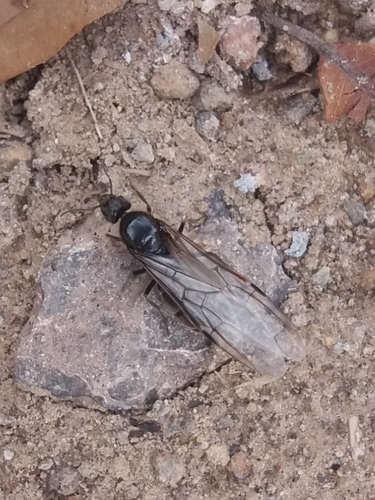
When do Escamolera ants have nuptial flights?
They fly during the day after a heavy rain in April or May.
Source: Wikipedia
What do Escamolera ants eat?
They eat dead insects, seeds, crustaceans, annelids, mollusks, carrion, animal droppings, and extrafloral nectar.
Source: Wikipedia
Where are Escamolera ants found?
They inhabit arid and semi-arid regions of the southwestern US and Mexico, from Colorado and Texas down to Quintana Roo.
Source: Wikipedia
Same family (Formicidae)
 Eastern Black Carpenter AntCamponotus pennsylvanicusCan damage your home
 Red Imported Fire AntSolenopsis invictaCan sting
 American Winter AntPrenolepis imparis
 Argentine AntLinepithema humileNuisance, not dangerous
 Immigrant Pavement AntTetramorium immigransCan sting
 Odorous House AntTapinoma sessileCan damage your home
Sources
- Wikipedia: https://en.wikipedia.org/wiki/Liometopum_apiculatum
Look it up elsewhere: GBIF · iNaturalist · BugGuide · ITIS · Wikipedia
Text written 2026-10-24 from the sources above and checked sentence by sentence against them. Data fetched 2026-10-24.