 Bug FAQ
Flounced Rustic
Luperina testacea · Order: Lepidoptera · Family: Noctuidae
Source: Wikipedia
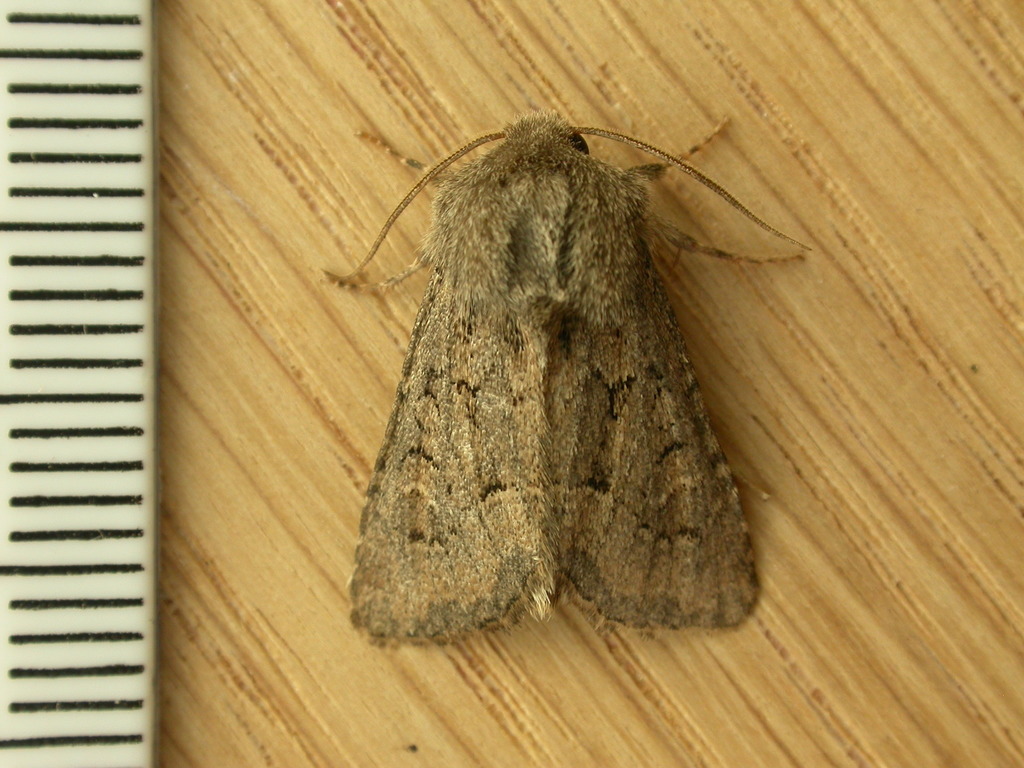
The Flounced Rustic moth has a wingspan of about 30 to 35 mm and forewings 14 to 18 mm long. It flies in a single generation from mid-July to early October across Europe, Asia Minor and Armenia. The caterpillars eat a range of grasses and grain crops, so they can become garden or field pests.
Source: Wikipedia
How to recognize it
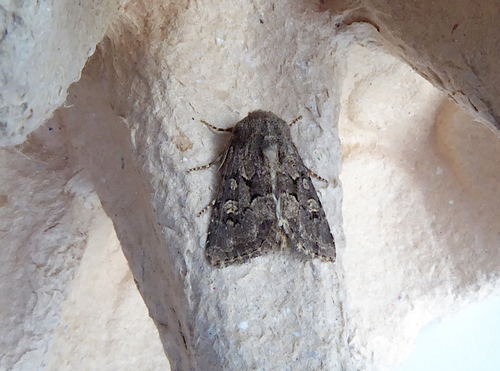
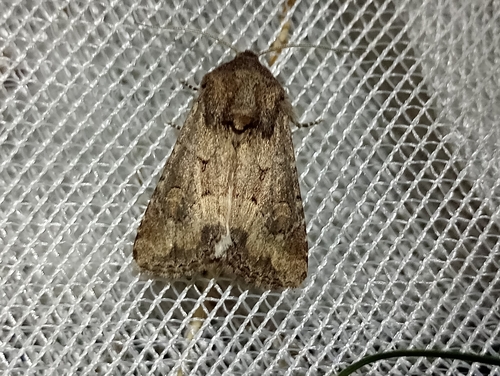
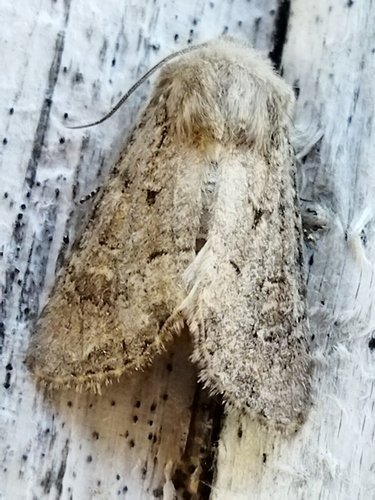
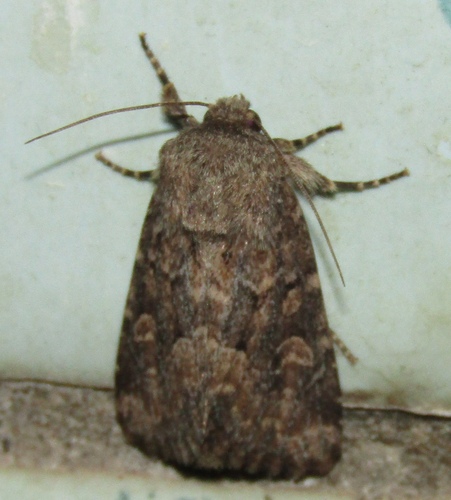
The forewings are dark brownish-gray, sometimes with a faint ochre or brown tint; veins appear darker and the inner and outer lines are double and pale-filled. Variations include pale grey forms without distinct markings (ab. obsoleta), darker grey (ab. cinerea), and blackish forms (ab. nigrescens) that may show connecting black streaks between the lines.
Source: Wikipedia
Size
Wingspan ranges from 30 to 35 mm. Forewing length is between 14 and 18 mm.
Source: Wikipedia
Where it lives
It is found throughout Europe, Asia Minor and Armenia.
Source: Wikipedia
What it eats
The larvae feed on various grasses and grain crops.
Source: Wikipedia
When you see it
The moth is active from mid-July through early October.
Source: Wikipedia
Where it comes from
Its native range includes Europe, Asia Minor and Armenia.
Source: Wikipedia
More photos
Questions people ask
When does the Flounced Rustic moth fly?
Adults are on the wing from mid-July to early October.
Source: Wikipedia
How large is this moth?
Its wingspan is about 30 to 35 mm and the forewings are 14 to 18 mm long.
Source: Wikipedia
Same family (Noctuidae)
 Ipsilon Dart MothAgrotis ipsilonDamages trees, gardens or crops
 Fall Armyworm MothSpodoptera frugiperdaDamages trees, gardens or crops
 Army Cutworm MothEuxoa auxiliarisDamages trees, gardens or crops
 Large Yellow UnderwingNoctua pronubaDamages trees, gardens or crops
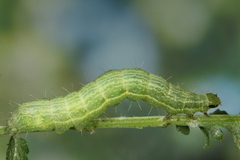 Silver ΥAutographa gamma
 American DaggerAcronicta americanaCan irritate skin
Sources
- Wikipedia: https://en.wikipedia.org/wiki/Luperina_testacea
Look it up elsewhere: GBIF · iNaturalist · BugGuide · Wikipedia
Text written 2026-10-24 from the sources above and checked sentence by sentence against them. Data fetched 2026-10-22.