 Bug FAQ
Green Carpet Owlet
Ichneutica plena · Order: Lepidoptera · Family: Noctuidae
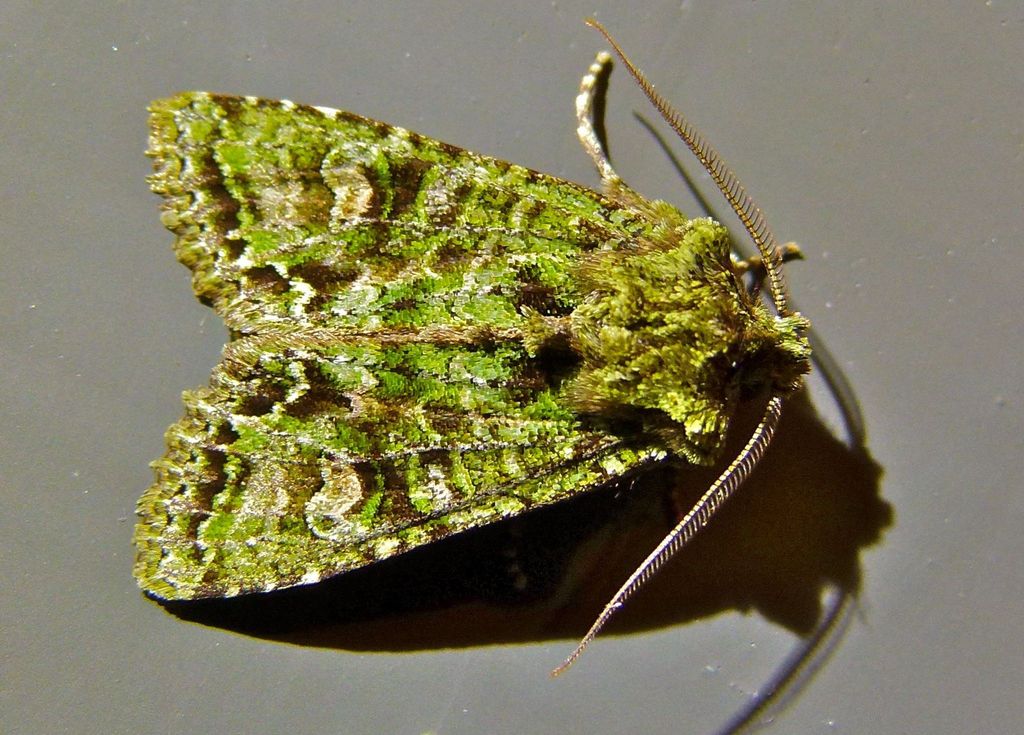
The Green Carpet Owlet is a moth native to New Zealand that flies from late winter through autumn. Its larvae feed on a variety of herbaceous plants, including apples, fuchsia and Coprosma species.
Source: Wikipedia
How to recognize it
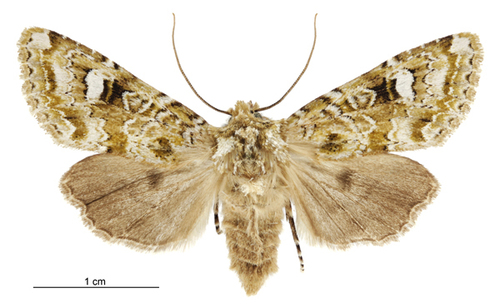
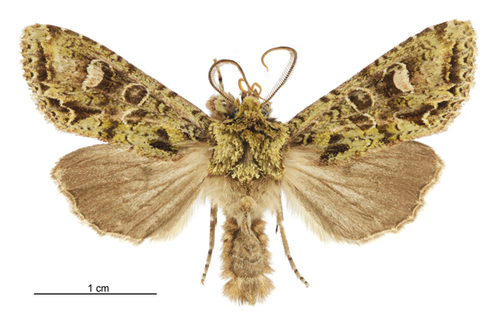
Males are green above and ash-gray underneath, with forewings that have black shading, denticulated transverse lines, large pale-green orbicular and reniform spots edged in black, and black marginal points.
Source: Wikipedia
Size
Males have a wingspan of about 31.5 to 39 mm and females about 31 to 40 mm.
Source: Wikipedia
Where it lives
It is found throughout the North, South and Stewart Islands of New Zealand and is attracted to light, often being caught in mercury-vapour light traps.
Source: Wikipedia
What it eats
Larvae have been recorded feeding on apples. They also eat various herbaceous plants such as Fuchsia excorticata, Coprosma species and garden fuchsia.
Source: Wikipedia
When you see it
The flight period extends from late August through May.
Source: Wikipedia
Where it comes from
The species is endemic to New Zealand.
Source: Wikipedia
More photos

Questions people ask
What plants do the larvae eat?
The larvae feed on apples and on herbaceous plants such as fuchsia, Coprosma species and garden fuchsia.
Source: Wikipedia
Where is the Green Carpet Owlet found?
It is endemic to New Zealand and occurs throughout the North, South and Stewart Islands.
Source: Wikipedia
How can I tell this moth apart from similar species?
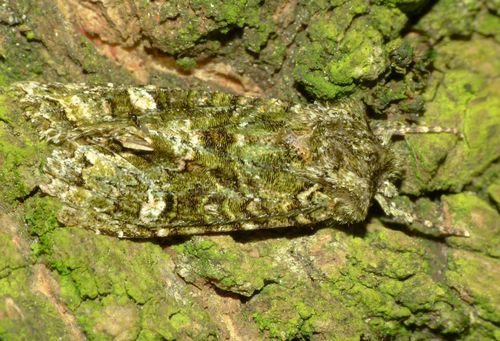
It is variable in appearance but differs from the similar Ichneutica peridotea and Ichneutica insignis, which are its usual look-alikes.
Source: Wikipedia
Same family (Noctuidae)
 Ipsilon Dart MothAgrotis ipsilonDamages trees, gardens or crops
 Fall Armyworm MothSpodoptera frugiperdaDamages trees, gardens or crops
 Army Cutworm MothEuxoa auxiliarisDamages trees, gardens or crops
 Large Yellow UnderwingNoctua pronubaDamages trees, gardens or crops
 Silver ΥAutographa gamma
 American DaggerAcronicta americanaCan irritate skin
Sources
- Wikipedia: https://en.wikipedia.org/wiki/Ichneutica_plena
Look it up elsewhere: GBIF · iNaturalist · BugGuide · Wikipedia
Text written 2026-10-23 from the sources above and checked sentence by sentence against them. Data fetched 2026-10-23.