 Bug FAQ
Lesser Broad-bordered Yellow Underwing
Noctua janthe · Order: Lepidoptera · Family: Noctuidae
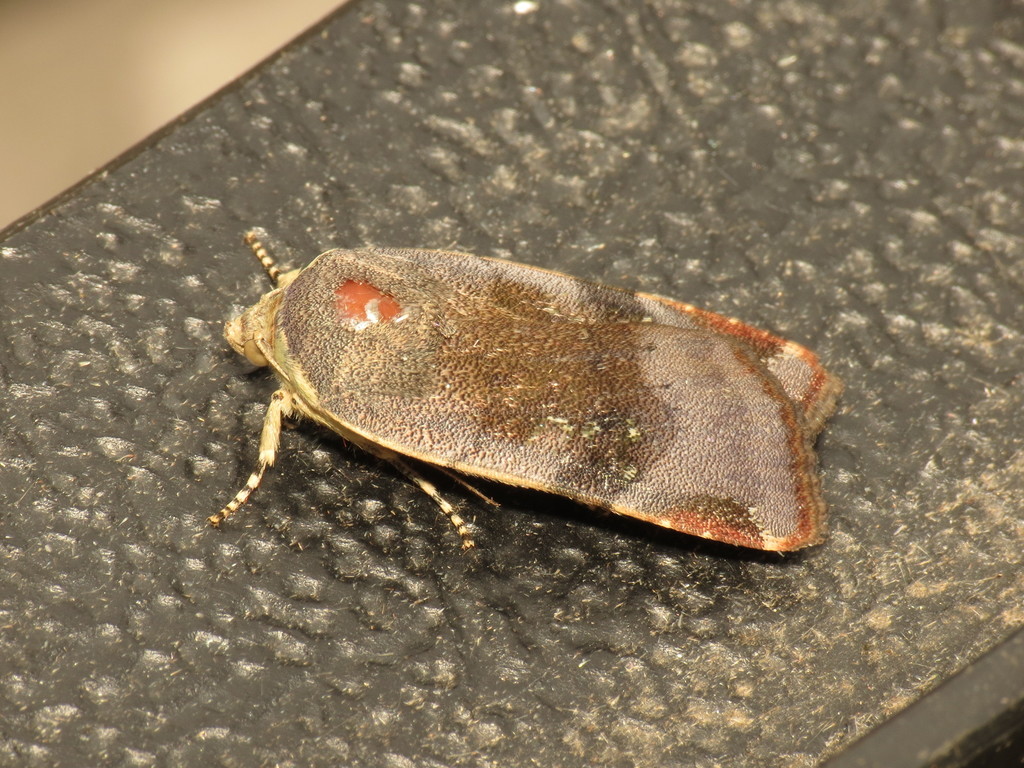
The Lesser Broad-bordered Yellow Underwing has a wingspan of about 30 to 40 mm and forewings 16 to 20 mm long. It flies as an adult in one generation from late June through September and its larvae eat a variety of deciduous trees, shrubs and herbaceous plants.
Source: Wikipedia
How to recognize it
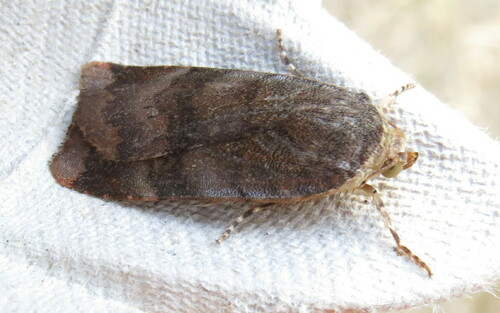
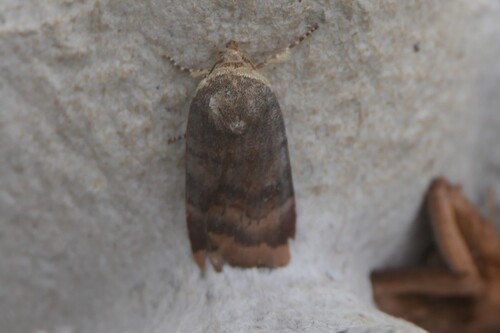
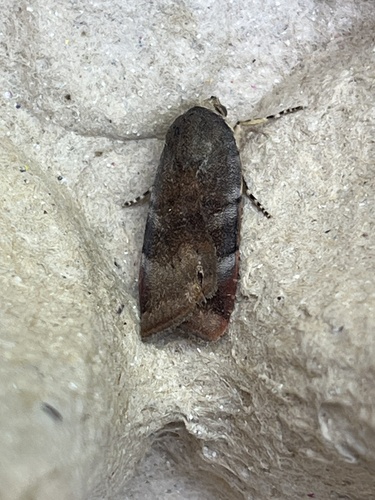
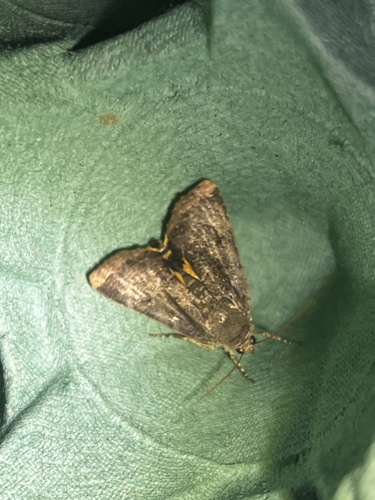
The forewings can be bright ochre, gray or brown, sometimes showing a reddish or light purple tint. The hindwings are orange-yellow with a broad black band near the edge.
Source: Wikipedia
Size
Wingspan ranges from 30 to 40 mm (1.2 to 1.6 in). Forewing length is 16 to 20 mm (0.63 to 0.79 in).
Source: Wikipedia
Where it lives
It occurs across Europe and North Africa.
Source: Wikipedia
What it eats
Caterpillars feed on many deciduous trees, shrubs and herbaceous plants.
Source: Wikipedia
Life cycle
Adults are on the wing in a single generation from late June to September.
Source: Wikipedia
When you see it
The flight period spans late June through September.
Source: Wikipedia
Where it comes from
Its native range includes Europe and North Africa.
Source: Wikipedia
Lookalikes
It is very similar to Noctua janthina and can only be reliably separated by examining the genitalia. Some authors treat Noctua janthe and Noctua janthina as the same species.
Source: Wikipedia
More photos
Questions people ask
When can I see the Lesser Broad-bordered Yellow Underwing?
Adults fly in one generation from late June through September.
Source: Wikipedia
What does this moth look like?
Its forewings vary from bright ochre to gray or brown with possible reddish or light purple tones, and the hindwings are orange-yellow with a broad black band.
Source: Wikipedia
How can I tell it apart from similar species?
It can only be distinguished from Noctua janthina by examining the genitalia, though some experts consider them the same species.
Source: Wikipedia
Same family (Noctuidae)
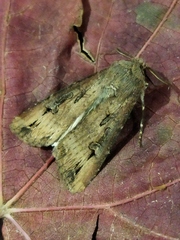 Ipsilon Dart MothAgrotis ipsilonDamages trees, gardens or crops
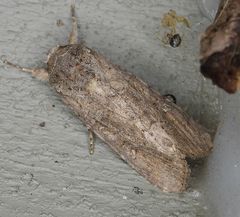 Fall Armyworm MothSpodoptera frugiperdaDamages trees, gardens or crops
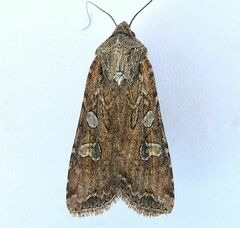 Army Cutworm MothEuxoa auxiliarisDamages trees, gardens or crops
 Large Yellow UnderwingNoctua pronubaDamages trees, gardens or crops
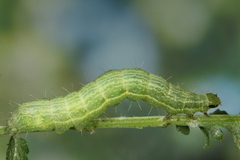 Silver ΥAutographa gamma
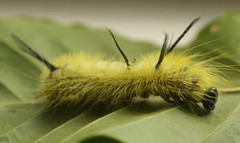 American DaggerAcronicta americanaCan irritate skin
Sources
- Wikipedia: https://en.wikipedia.org/wiki/Noctua_janthe
Look it up elsewhere: GBIF · iNaturalist · BugGuide · Wikipedia
Text written 2026-10-24 from the sources above and checked sentence by sentence against them. Data fetched 2026-10-22.