 Bug FAQ
Northern Amber Bumble Bee
Bombus borealis · Order: Hymenoptera · Family: Apidae
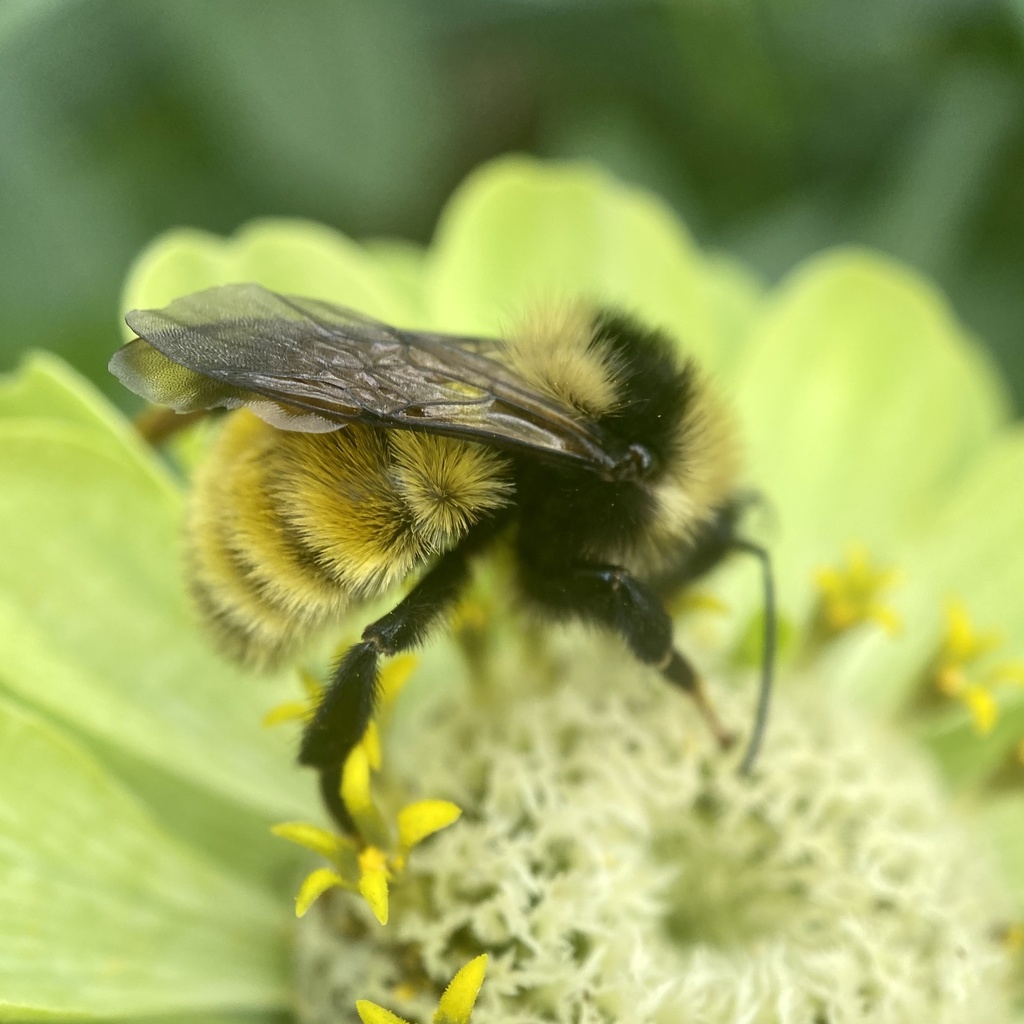
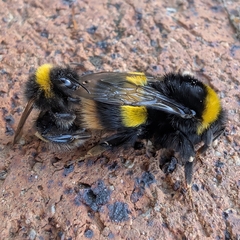
The northern amber bumble bee lives in woodlands and nests underground. Queens are about 1.8 to 2.2 cm long while workers are about 1.3 cm and share the same yellow and pale-white hair coloration. It feeds on a variety of plants such as milkvetches, thistles, blackberries, goldenrods, comfrey, clovers and vetches.
Source: Wikipedia
How to recognize it
It has yellow hairs on its body and pale-white hairs on the head.
Source: Wikipedia
Size
Queens measure 1.8 to 2.2 cm in length. Workers are about 1.3 cm long.
Source: Wikipedia
Where it lives
Found mainly in woodland areas. Nests are usually underground.
Source: Wikipedia
Where it is found in the US
Recorded in 31 of 51 states and DC. Most records: Vermont, Minnesota, Maine, Wisconsin, Michigan, North Dakota, New York, New Hampshire.
Darker = more records. Counts are museum and citizen-science records, not population size.
Source: GBIF
Status: native in North America; native in Canada; native in United States. Source: iNaturalist
Months it is reported in the US
Source: GBIF
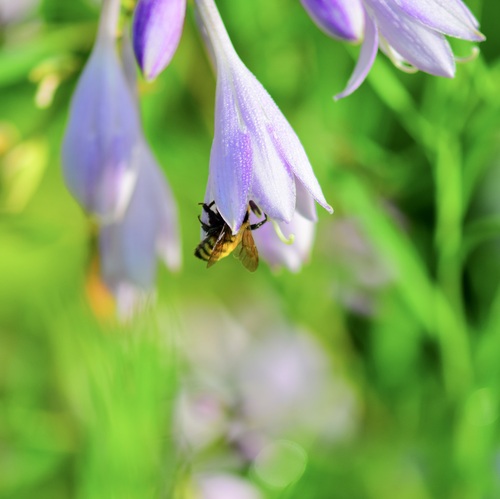
More photos
Questions people ask
Where can I find northern amber bumble bees?
They are typically found in woodland habitats and nest underground in northern North America.
Source: Wikipedia
What do these bees look like?
Queens are 1.8 to 2.2 cm long and workers about 1.3 cm; both have yellow body hairs and pale-white hairs on the head.
Source: Wikipedia
Same family (Apidae)


Sources
- Wikipedia: https://en.wikipedia.org/wiki/Bombus_borealis
Look it up elsewhere: GBIF · iNaturalist · BugGuide · ITIS · Wikipedia
Text written 2026-10-22 from the sources above and checked sentence by sentence against them. Data fetched 2026-10-22.