 Bug FAQ
Red-belted Bumble Bee
Bombus rufocinctus · Order: Hymenoptera · Family: Apidae
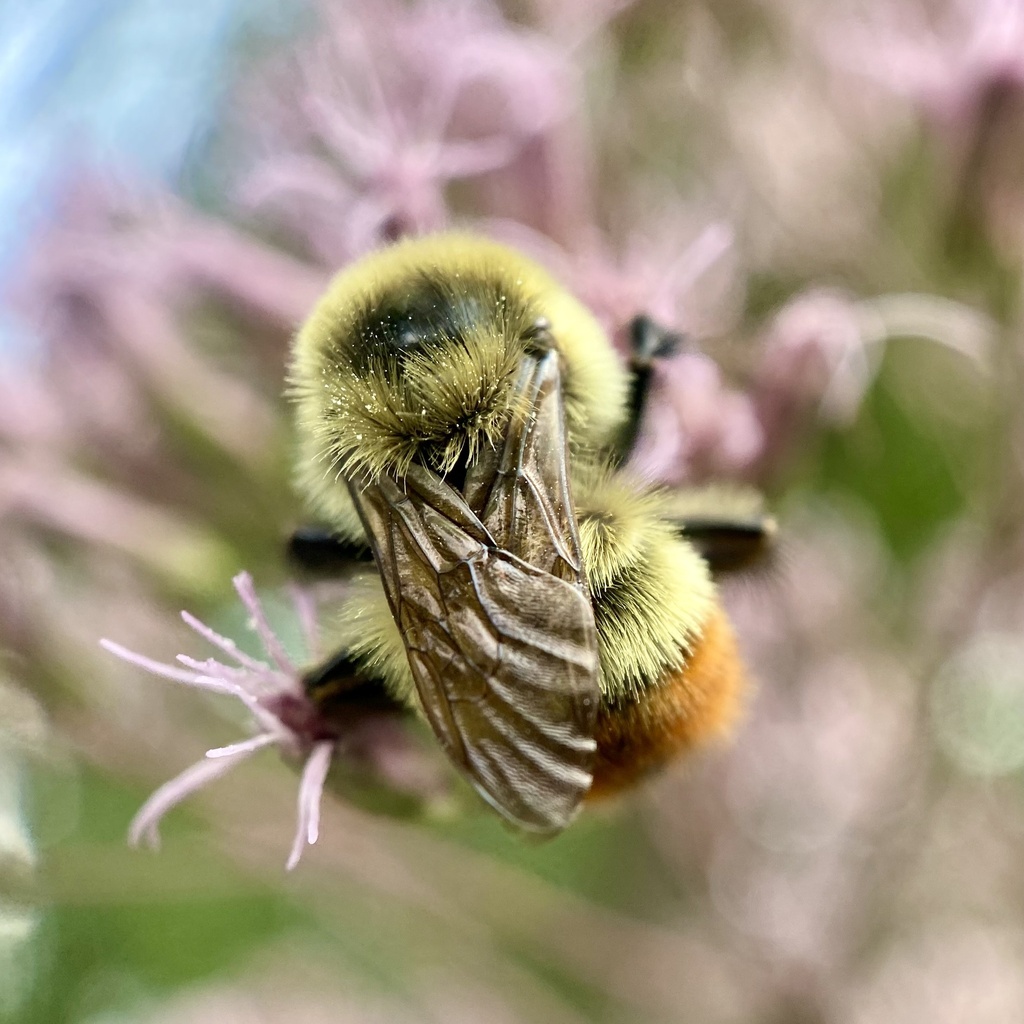
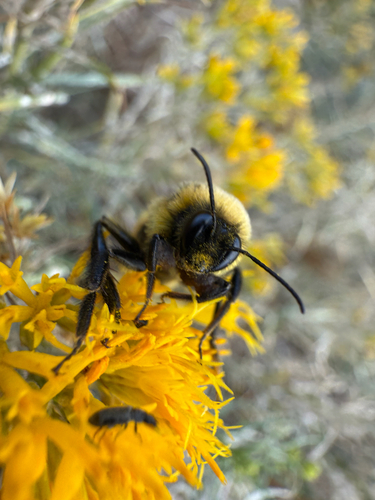
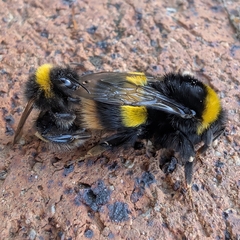
The red-belted bumble bee is a small, short-tongued bumble bee that lives in wooded areas, parks and gardens across much of North America. Queens are about 1.6 to 1.8 cm long, workers 1.1 to 1.2 cm, and they are mostly black with yellow and reddish hairs on the abdomen. They feed on a variety of flowering plants such as chicories, strawberries, sunflowers and goldenrods.
Source: Wikipedia
Size
Queens measure 1.6 to 1.8 cm in length and are just under 1 cm wide at the abdomen. Workers are 1.1 to 1.2 cm long and about 0.5 cm wide at the abdomen.
Source: Wikipedia
Where it lives
They live in and around wooded areas and can also be found in urban parks and gardens. Nests are usually built on the ground or slightly above it.
Source: Wikipedia
Where it comes from
Native to North America, they are widely distributed across Canada and the western, mid-western, and northeastern United States. They may also occur in Mexico.
Source: Wikipedia
Where it is found in the US
Recorded in 34 of 51 states and DC. Most records: Minnesota, Wisconsin, Colorado, Idaho, Washington, Wyoming, Oregon, Illinois.
Darker = more records. Counts are museum and citizen-science records, not population size.
Source: GBIF
Status: native in North America; native in United States; native in Canada. Source: iNaturalist
Months it is reported in the US
Source: GBIF
More photos
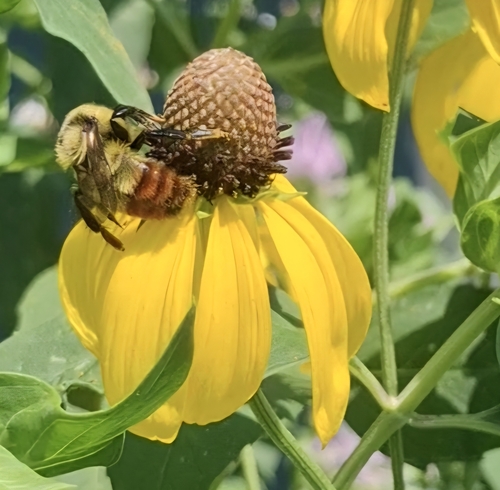
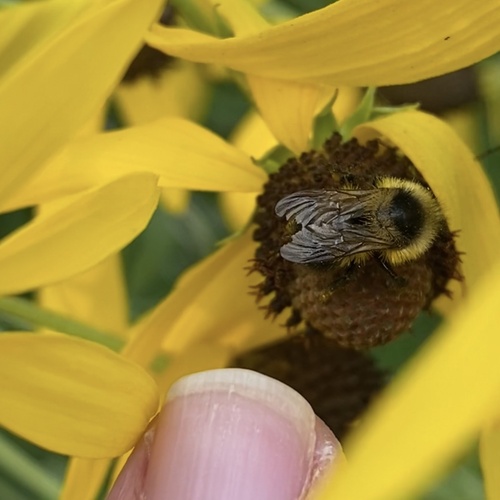
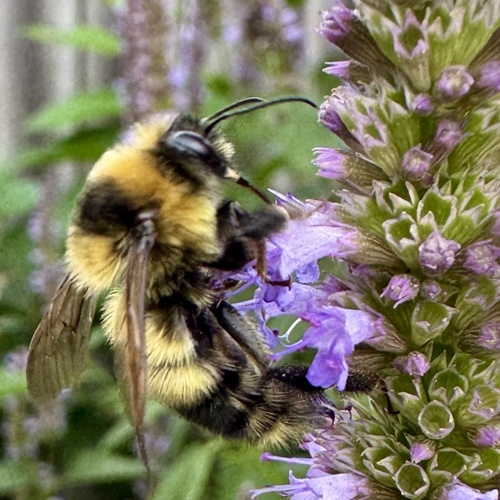
Same family (Apidae)


Sources
- Wikipedia: https://en.wikipedia.org/wiki/Bombus_rufocinctus
Look it up elsewhere: GBIF · iNaturalist · BugGuide · ITIS · Wikipedia
Text written 2026-10-22 from the sources above and checked sentence by sentence against them. Data fetched 2026-10-22.