 Bug FAQ
Small pugnacious ant
Anoplolepis steingroeveri · Order: Hymenoptera · Family: Formicidae
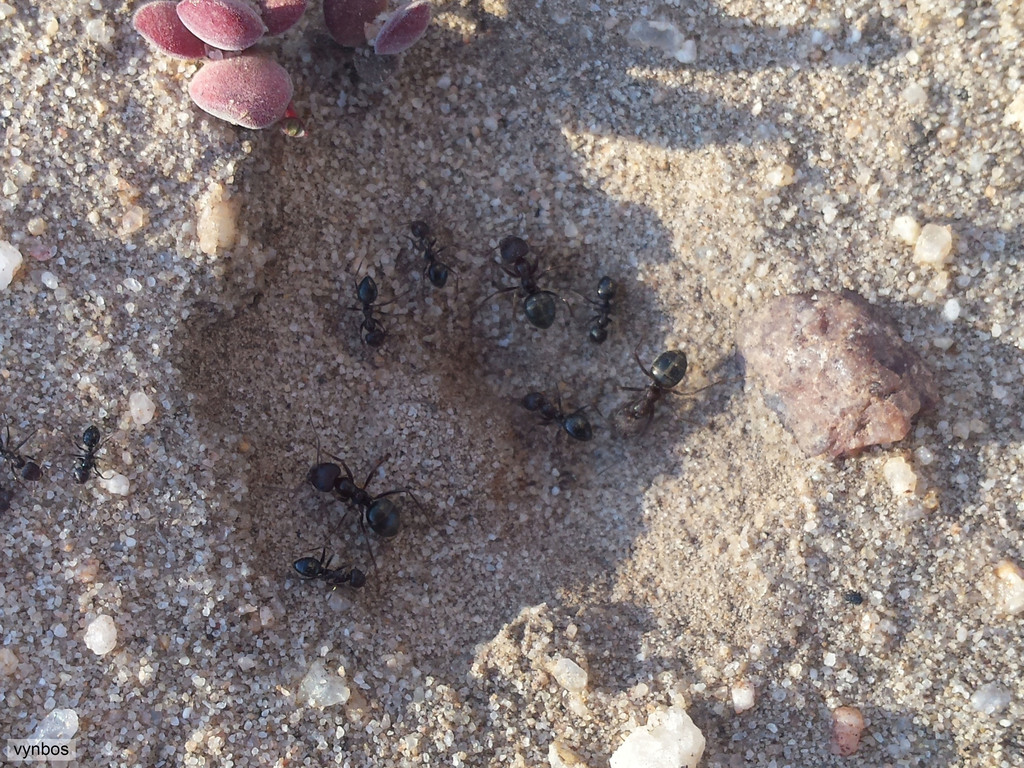
The small pugnacious ant (Anoplolepis steingroeveri) looks like the darker form of the common pugnacious ant but lacks the chequer-board pattern on its gaster. It is native to southern Africa, occurring in South Africa, Lesotho, Botswana and Namibia.
Source: Wikipedia
How to recognize it
Workers resemble darker morphs of Anoplolepis custodiens but do not show the reflective chequer-board pattern on the abdomen.
Source: Wikipedia
Where it comes from
The species is native to southern Africa, found in South Africa, Lesotho, Botswana and Namibia.
Source: Wikipedia
Lookalikes
It can be confused with the common pugnacious ant (Anoplolepis custodiens); the latter has a distinctive chequer-board pattern on its gaster caused by differently oriented hairs.
Source: Wikipedia
More photos
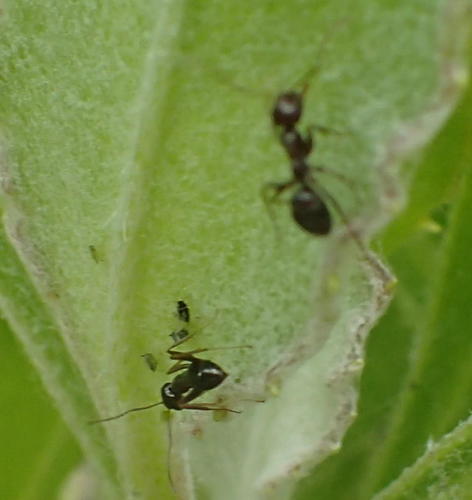
Questions people ask
How can I tell Anoplolepis steingroeveri apart from similar ants?
Look for the absence of the chequer-board pattern on the gaster; the similar common pugnacious ant shows that pattern due to reflective hairs.
Source: Wikipedia
Same family (Formicidae)
 Eastern Black Carpenter AntCamponotus pennsylvanicusCan damage your home
 Red Imported Fire AntSolenopsis invictaCan sting
 American Winter AntPrenolepis imparis
 Argentine AntLinepithema humileNuisance, not dangerous
 Immigrant Pavement AntTetramorium immigransCan sting
 Odorous House AntTapinoma sessileCan damage your home
Sources
- Wikipedia: https://en.wikipedia.org/wiki/Anoplolepis_steingroeveri
Look it up elsewhere: GBIF · iNaturalist · BugGuide · ITIS · Wikipedia
Text written 2026-10-23 from the sources above and checked sentence by sentence against them. Data fetched 2026-10-23.