 Bug FAQ
Spurred Ceratina
Ceratina calcarata · Order: Hymenoptera · Family: Apidae
Also called: Spurred Carpenter Bee, Spurred Small Carpenter
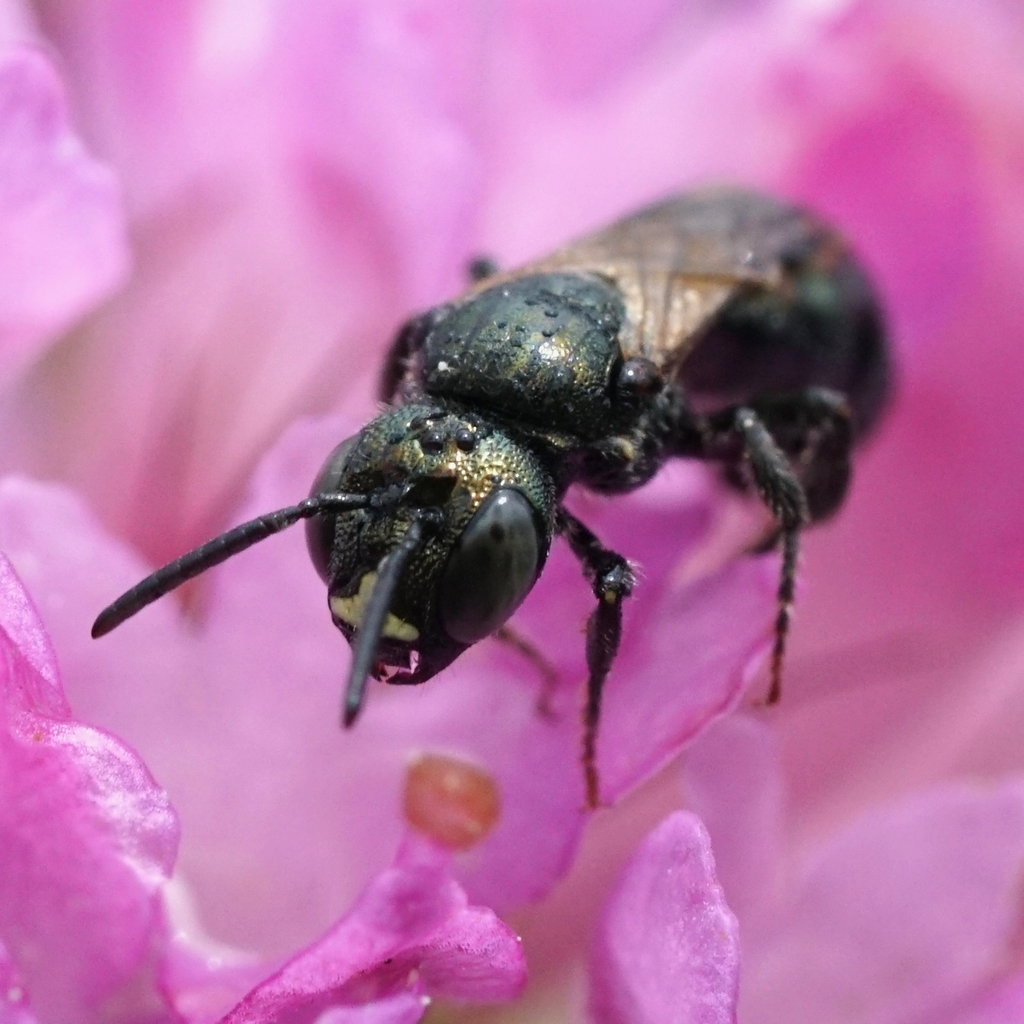
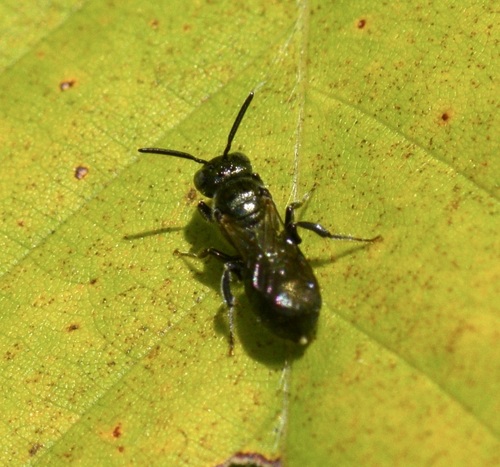
Spurred Ceratina is a small native bee found across eastern North America, from Georgia up to Ontario and east to Nova Scotia. Females build nests in thin stems or broken twigs such as wild carrot and multifloral rose, and the nesting season runs from late May to early July. They are generalist pollinators that visit crops like watermelon and cucumber, and mother bees influence offspring behavior toward calmness.
Source: Wikipedia
How to recognize it
Female spurred ceratina look almost the same as females of Ceratina dupla. Male spurred ceratina can be told apart from C. dupla by how developed the tooth on the hind femur is.
Source: Wikipedia
Where it lives
They are common, generalist native pollinators in eastern North America. Females usually nest in small plant stems or broken twigs like wild carrot and multifloral rose.
Source: Wikipedia
What it eats
They pollinate many plants, including watermelon and cucumber, very effectively. Offspring raised by their mother show calmer behavior than those raised without parental care.
Source: Wikipedia
Life cycle
Adults spend their first winter in the nest where they were born; males leave in early May and females follow about two weeks later to start new nests.
Source: Wikipedia
When you see it
Nesting occurs from late May through early July.
Source: Wikipedia
Where it comes from
Their range stretches from Georgia northward to Ontario and eastward to Nova Scotia.
Source: Wikipedia
Lookalikes
Females of C. calcarata and C. dupla are nearly identical in appearance. Although they only interbreed where their ranges overlap, they can produce viable hybrid offspring.
Source: Wikipedia
Where it is found in the US
Recorded in 40 of 51 states and DC. Most records: Pennsylvania, Maryland, New York, Vermont, West Virginia, Kansas, Virginia, Illinois.
Darker = more records. Counts are museum and citizen-science records, not population size.
Source: GBIF
Status: native in North America; native in Canada; native in United States. Source: iNaturalist
Months it is reported in the US
Source: GBIF
More photos
Questions people ask
How can I tell a spurred ceratina from a similar bee?
Females look like those of Ceratina dupla, while males differ by the size of a tooth on the hind leg.
Source: Wikipedia
Where do these bees build their nests?
They use thin stems and broken twigs such as wild carrot and multifloral rose.
Source: Wikipedia
Are they beneficial for gardens?
Yes, they pollinate many crops like watermelon and cucumber.
Source: Wikipedia
Same family (Apidae)


Sources
- Wikipedia: https://en.wikipedia.org/wiki/Ceratina_calcarata
Look it up elsewhere: GBIF · iNaturalist · BugGuide · ITIS · Wikipedia
Text written 2026-10-22 from the sources above and checked sentence by sentence against them. Data fetched 2026-10-22.