 Bug FAQ
Tobacco Budworm Moth
Chloridea virescens · Order: Lepidoptera · Family: Noctuidae
Also called: Tobacco Budworm
Source: Wikipedia

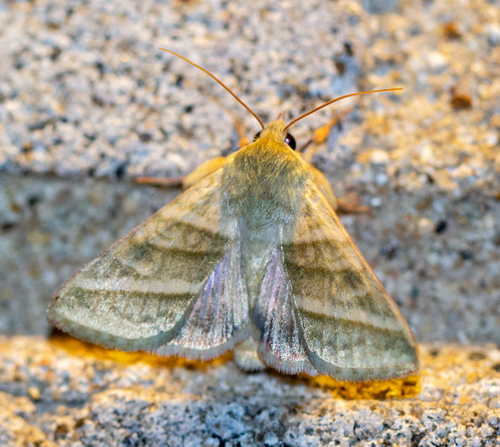
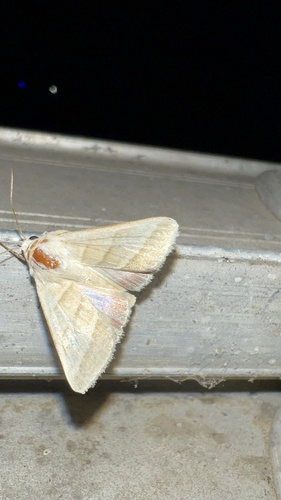
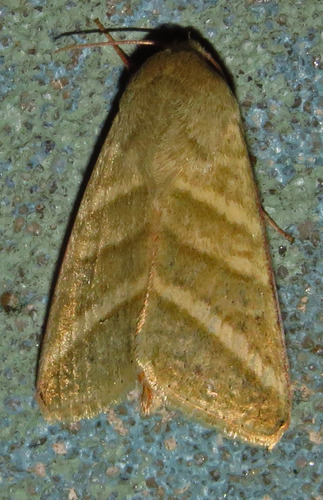
Adult tobacco budworms are brownish with a light green tinge, have three dark bands on the forewings edged in whitish cream, and a whitish hindwing with a dark edge. They go through egg, larval, pupal, and adult stages, producing about four to five generations each warm season.
Source: Wikipedia
How to recognize it
Adults are brownish with a light green tinge.
Source: Wikipedia
Size
Fully grown adults have a wingspan of 28 to 35 mm (about 1.1 to 1.4 inches).
Source: Wikipedia
Is it a pest in the house?
It also reproduces on a wide variety of garden plants, fruits, and vegetables.
Source: Wikipedia
How to get rid of it
Control is difficult because the species rapidly evolves resistance to insecticides and pesticides. Cotton has been genetically engineered to express Bacillus thuringiensis Cry1Ac and Cry1Ab proteins to resist the budworm.
Source: Wikipedia
Where it lives
They spend winter in the southern United States but can survive in sheltered northern sites such as greenhouses.
Source: Wikipedia
What it eats
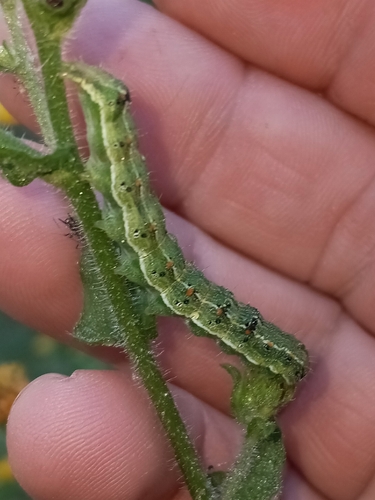
Larvae are major pests of field crops, especially tobacco and cotton. They can also develop on many other host plants, including fruits, vegetables, flowers, and weeds.
Source: Wikipedia
Life cycle
The moth passes through four stages: egg, larva, pupa, and adult. Depending on the region, it can produce four to five generations each year.
Source: Wikipedia
When you see it
Adults emerge from March to May in the southern United States. The life cycle mainly occurs during the warmer months from late spring to early fall.
Source: Wikipedia
Lookalikes
It was formerly confused with Heliothis zea; both belong to the “bollworm complex.”
Source: Wikipedia
Where it is found in the US
Recorded in 49 of 51 states and DC. Most records: California, Texas, North Carolina, Illinois, Oklahoma, Alabama, New York, Colorado.
Darker = more records. Counts are museum and citizen-science records, not population size.
Source: GBIF
Status: native in North America; native in Canada; native in United States. Source: iNaturalist
Months it is reported in the US
Source: GBIF
More photos
Questions people ask
How can I identify a tobacco budworm moth?
Look for a brownish moth with a light green tinge, three dark bands on the forewings edged in whitish cream, and a whitish hindwing with a dark outer band.
Source: Wikipedia
What crops does the tobacco budworm damage?
It damages tobacco, cotton, and many other crops such as fruits, vegetables, flowers, and weeds.
Source: Wikipedia
Why is the tobacco budworm hard to control?
It quickly evolves resistance to insecticides, and special Bt cotton varieties have been developed to combat it.
Source: Wikipedia
Same family (Noctuidae)
 Ipsilon Dart MothAgrotis ipsilonDamages trees, gardens or crops
 Fall Armyworm MothSpodoptera frugiperdaDamages trees, gardens or crops
 Army Cutworm MothEuxoa auxiliarisDamages trees, gardens or crops
 Large Yellow UnderwingNoctua pronubaDamages trees, gardens or crops
 Silver ΥAutographa gamma
 American DaggerAcronicta americanaCan irritate skin
Sources
- Wikipedia: https://en.wikipedia.org/wiki/Chloridea_virescens
Look it up elsewhere: GBIF · iNaturalist · BugGuide · Wikipedia
Text written 2026-10-23 from the sources above and checked sentence by sentence against them. Data fetched 2026-10-23.