 Bug FAQ
Tricolored Bumble Bee
Bombus ternarius · Order: Hymenoptera · Family: Apidae
Also called: Tri-colored Bumble Bee, Tricoloured Bumble Bee, Orange-belted Bumble Bee
Source: Wikipedia

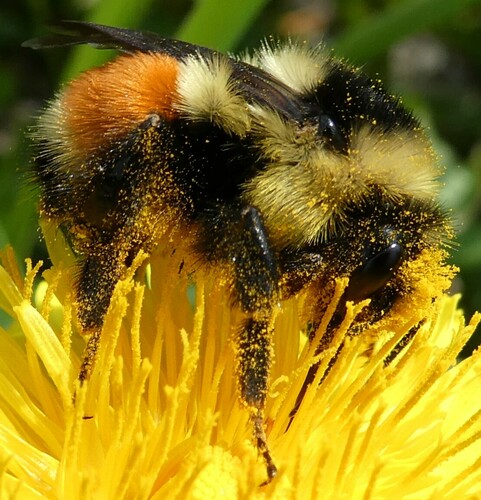
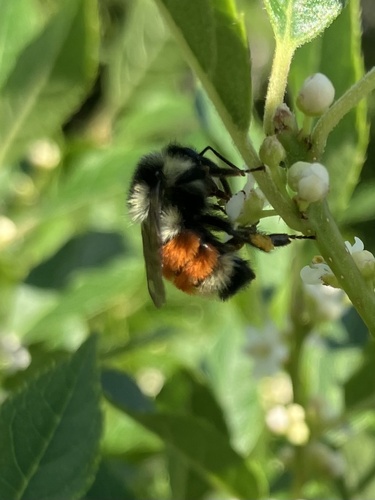
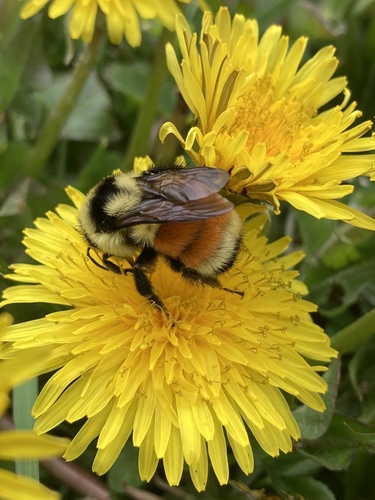
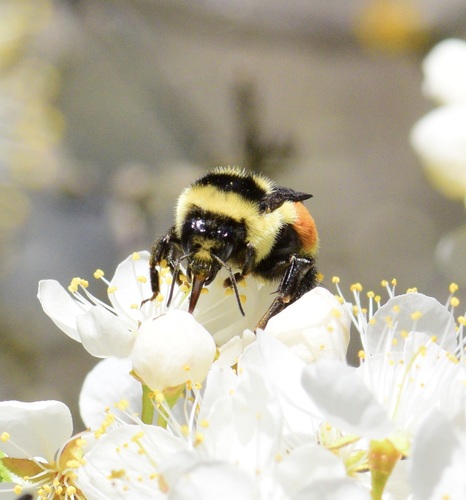
The tricolored bumble bee has a black head with a few pale yellow hairs, a yellow front and back thorax, orange on abdominal segments 2-3, and black on the terminal segments. Queens are 17 to 19 mm long, workers 8 to 13 mm, and drones 9.5 to 13 mm; colonies nest underground in shallow cavities and last only one season.
Source: Wikipedia
Size
Queens measure 17 to 19 mm in length with abdomens 8.5 to 9 mm wide. Workers are 8 to 13 mm long and drones are 9.5 to 13 mm long.
Source: Wikipedia
Does it bite or sting?
Queens and workers can sting.
Source: Wikipedia
Where it lives
They nest underground in small, shallow cavities such as rodent burrows or natural crevices.
Source: Wikipedia
What it eats
They forage on Rubus, goldenrods, Vaccinium, and milkweeds across their range.
Source: Wikipedia
Life cycle
Eggs develop through larva and pupa stages, with adult workers emerging about a month after the egg is laid. Because a colony lasts only a season, rapid development of the first workers is essential.
Source: Wikipedia
When you see it
Queens emerge from hibernation in late April to start new colonies. Workers are active from May through October, after which the colony dies except for hibernating queens.
Source: Wikipedia
Where it comes from
Their range covers the northern United States and much of Canada.
Source: Wikipedia
Lookalikes
Bombus huntii looks similar but has mainly yellow facial hairs instead of black.
Source: Wikipedia
Where it is found in the US
Recorded in 36 of 51 states and DC. Most records: Vermont, Minnesota, Maine, Michigan, New York, Wisconsin, New Hampshire, Massachusetts.
Darker = more records. Counts are museum and citizen-science records, not population size.
Source: GBIF
Status: native in North America; native in Canada; native in United States. Source: iNaturalist
Months it is reported in the US
Source: GBIF
More photos
Questions people ask
Can tricolored bumble bees sting people?
Yes, queens and workers can sting if they feel threatened.
Source: Wikipedia
When are tricolored bumble bees active?
Workers fly from May to October, while queens emerge in late April.
Source: Wikipedia
What plants do they visit for food?
They forage on Rubus, goldenrods, Vaccinium, and milkweeds.
Source: Wikipedia
Same family (Apidae)


Sources
- Wikipedia: https://en.wikipedia.org/wiki/Bombus_ternarius
Look it up elsewhere: GBIF · iNaturalist · BugGuide · ITIS · Wikipedia
Text written 2026-10-23 from the sources above and checked sentence by sentence against them. Data fetched 2026-10-22.