 Bug FAQ
White-shouldered Bumble Bee
Bombus appositus · Order: Hymenoptera · Family: Apidae

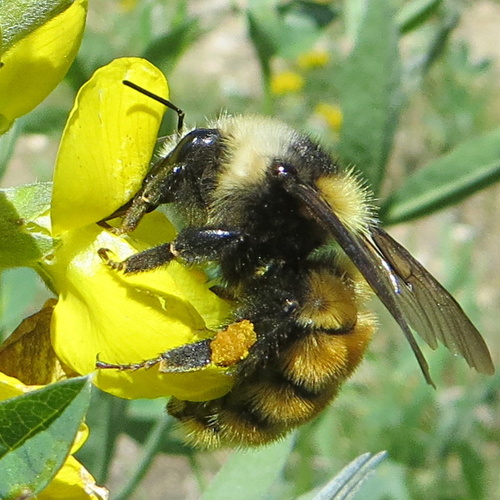
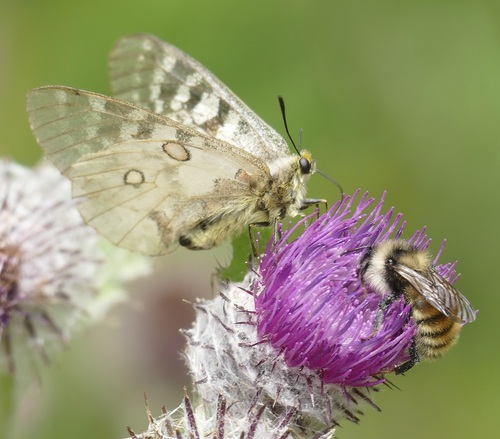
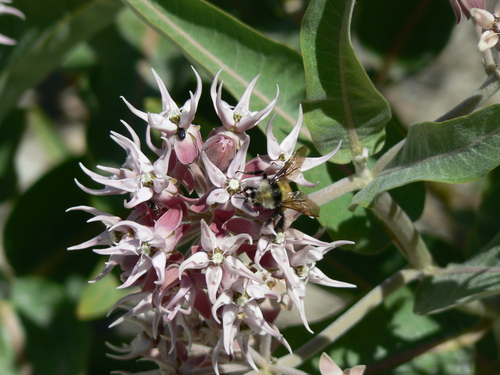
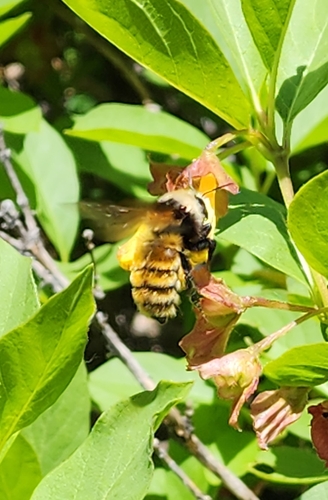
The white-shouldered bumble bee lives in open areas like meadows and slopes and nests either underground or on the ground surface. It is native to western North America, ranging from southwestern Canada down the Cascades and Sierra Nevada to central California. It feeds on many flowers, especially subalpine larkspur, and helps pollinate that plant.
Source: Wikipedia
Where it lives
It prefers open habitats such as meadows and slopes. Nests are built underground or on the surface.
Source: Wikipedia
What it eats
It especially favors subalpine larkspur and is a main pollinator of that flower.
Source: Wikipedia
Where it comes from
Its native range covers western Canada and the western United States. Specifically, it ranges from southwestern Canada south to the Cascades and Sierra Nevada, extending west to central California.
Source: Wikipedia
Lookalikes
It can host the cuckoo bumblebee Bombus insularis.
Source: Wikipedia
Where it is found in the US
Recorded in 17 of 51 states and DC. Most records: Colorado, Oregon, Utah, Idaho, Washington, Wyoming, Montana, California.
Darker = more records. Counts are museum and citizen-science records, not population size.
Source: GBIF
Status: native in North America; native in United States; native in Canada. Source: iNaturalist
Months it is reported in the US
Source: GBIF
More photos
Same family (Apidae)


Sources
- Wikipedia: https://en.wikipedia.org/wiki/Bombus_appositus
Look it up elsewhere: GBIF · iNaturalist · BugGuide · ITIS · Wikipedia
Text written 2026-10-22 from the sources above and checked sentence by sentence against them. Data fetched 2026-10-22.