 Bug FAQ
Yellow-fronted Bumble Bee
Bombus flavifrons · Order: Hymenoptera · Family: Apidae
Also called: Yellow Head Bumble Bee
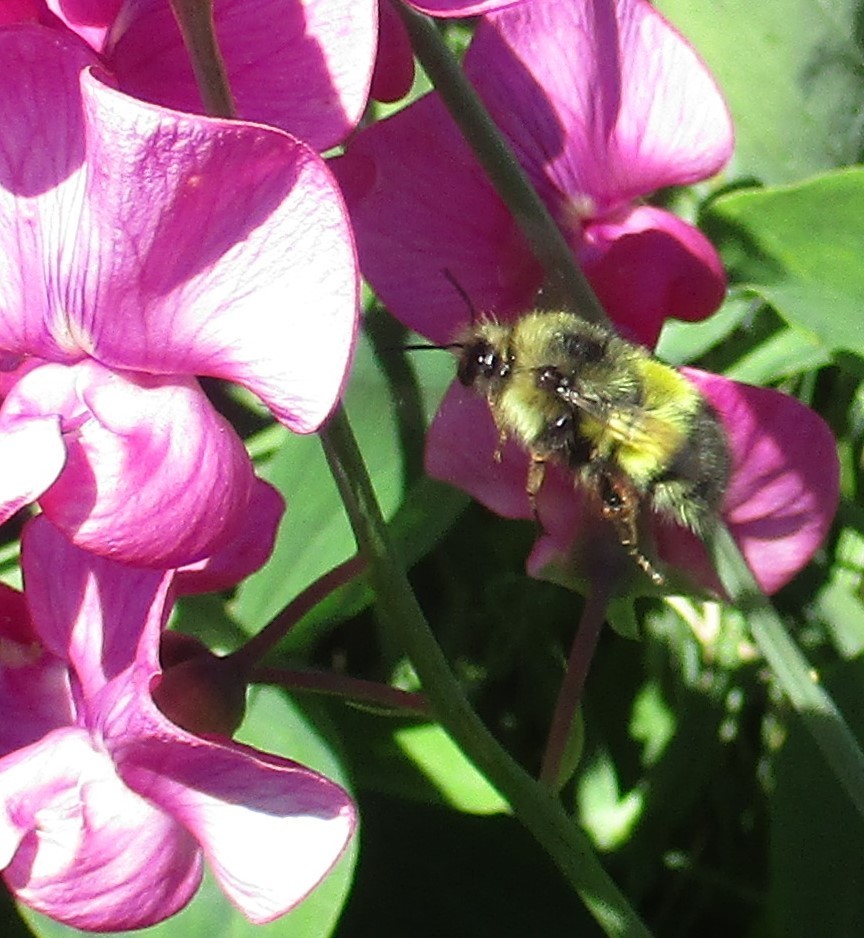
The queen is 13 to 16 mm long with a 27 to 34 mm wingspan, while workers are 9 to 12 mm long and 19 to 27 mm across the wings. They live in high-altitude tundra, taiga, and mountain meadows across Canada, Alaska and the western United States, feeding on many flowers such as asters and legumes. Queens emerge in late March, start nests in old mouse burrows, workers appear about a month later, and the colony dies off by the end of August except for new queens that hibernate.
Source: Wikipedia
How to recognize it
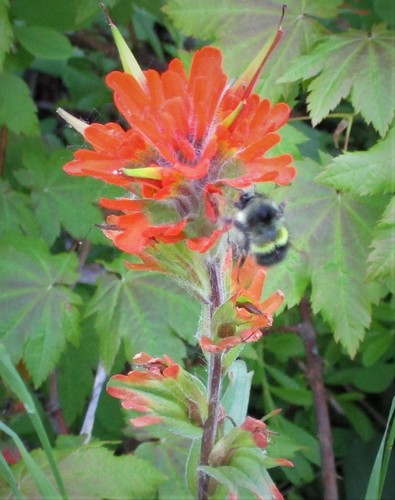
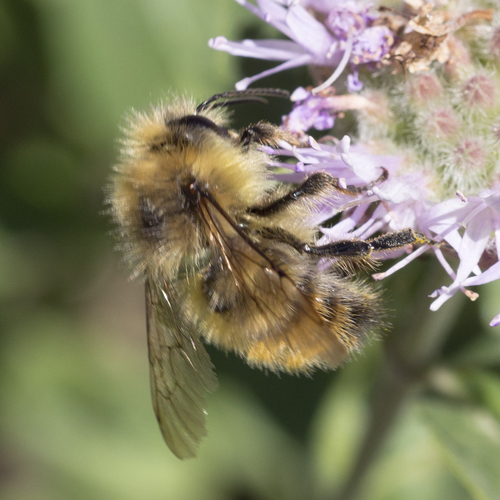
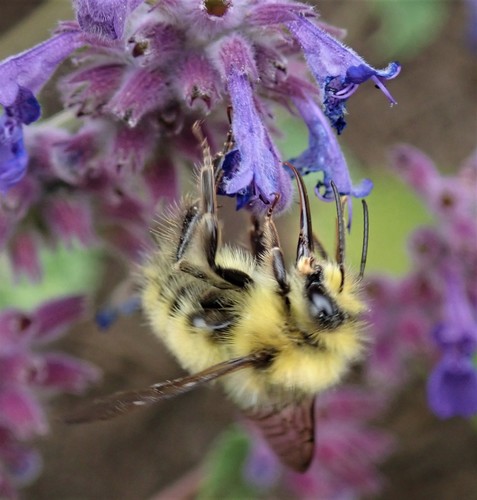
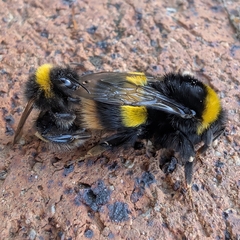
The head is yellow with some black hairs, the thorax is a mix of black and yellow often with a central black patch, and the first two abdominal segments are yellow with possible black centers; segments three and four are red and the tail is black, sometimes showing yellow.
Source: Wikipedia
Size
Queens measure 13 to 16 mm in body length and have a wingspan of 27 to 34 mm. Workers are 9 to 12 mm long with a wingspan of 19 to 27 mm.
Source: Wikipedia
Where it lives
Colonies decline by the end of August; all members die except new queens that hibernate in the soil.
Source: Wikipedia
What it eats
Adults feed on a variety of flowering plants, especially those in the Asteraceae, Fabaceae, Saxifragaceae, and Lamiaceae families.
Source: Wikipedia
Life cycle
The nest collapses at the end of August, with only new queens surviving to hibernate.
Source: Wikipedia
When you see it
Queens appear in late March, and the first workers show up about a month later.
Source: Wikipedia
Lookalikes
This bumblebee can be parasitized by the cuckoo bumblebee Bombus insularis.
Source: Wikipedia
Where it is found in the US
Recorded in 18 of 51 states and DC. Most records: Alaska, Washington, Oregon, Colorado, California, Idaho, Wyoming, Utah.
Darker = more records. Counts are museum and citizen-science records, not population size.
Source: GBIF
Status: native in North America; native in Canada; native in United States. Source: iNaturalist
Months it is reported in the US
Source: GBIF
More photos
Questions people ask
When do they appear each year?
Queens emerge from hibernation in late March and workers appear about a month later.
Source: Wikipedia
Where can I find them?
They live in high-altitude tundra, taiga, and mountain meadows across Canada, Alaska, and the western United States.
Source: Wikipedia
Same family (Apidae)


Sources
- Wikipedia: https://en.wikipedia.org/wiki/Bombus_flavifrons
Look it up elsewhere: GBIF · iNaturalist · BugGuide · ITIS · Wikipedia
Text written 2026-10-22 from the sources above and checked sentence by sentence against them. Data fetched 2026-10-22.